
From Pura Vida to Peak Adventure:
What to Do in Costa Rica
Welcome to the Land of Pura Vida
If you have ever spent more than five minutes researching travel, you have likely encountered the phrase Pura Vida. Literally translated, it means "Pure Life," but in Costa Rica, it is a greeting, a farewell, an apology, and a philosophy all rolled into one. It represents a refusal to sweat the small stuff and a deep-seated appreciation for the natural world. This isn't just a marketing slogan; it is the pulse of a nation that decided decades ago to prioritize its environment over an army, turning its back on conflict to become the world's premier destination for eco-conscious travelers.
Why Costa Rica is the Ultimate "Choose Your Own Adventure" Destination
Costa Rica is a rare geographical anomaly. It occupies a tiny fraction of the world's landmass - about the size of West Virginia - yet it holds nearly 6% of the planet's biodiversity. For a traveler, this density is a superpower. You can wake up in a humid rainforest listening to howler monkeys, drive four hours through misty mountain passes, and finish your day watching the sunset over a Pacific surf break.
The beauty of Costa Rica lies in its versatility. It doesn't force you into a single lane. You can spend a week in a high-end luxury resort with a private hot spring, or you can strap on a pack and trek into primary rainforests where the nearest paved road is a two-day hike away. Whether you are a honeymooner looking for romance, a family seeking educational adventure, or a solo traveler chasing the perfect wave, Costa Rica molds itself to your desires. It is a playground that respects its equipment, and as a visitor, you are invited to play. Ready to build your own Costa Rica adventure? Explore our range of custom Costa Rica tours to find the trip that fits you.
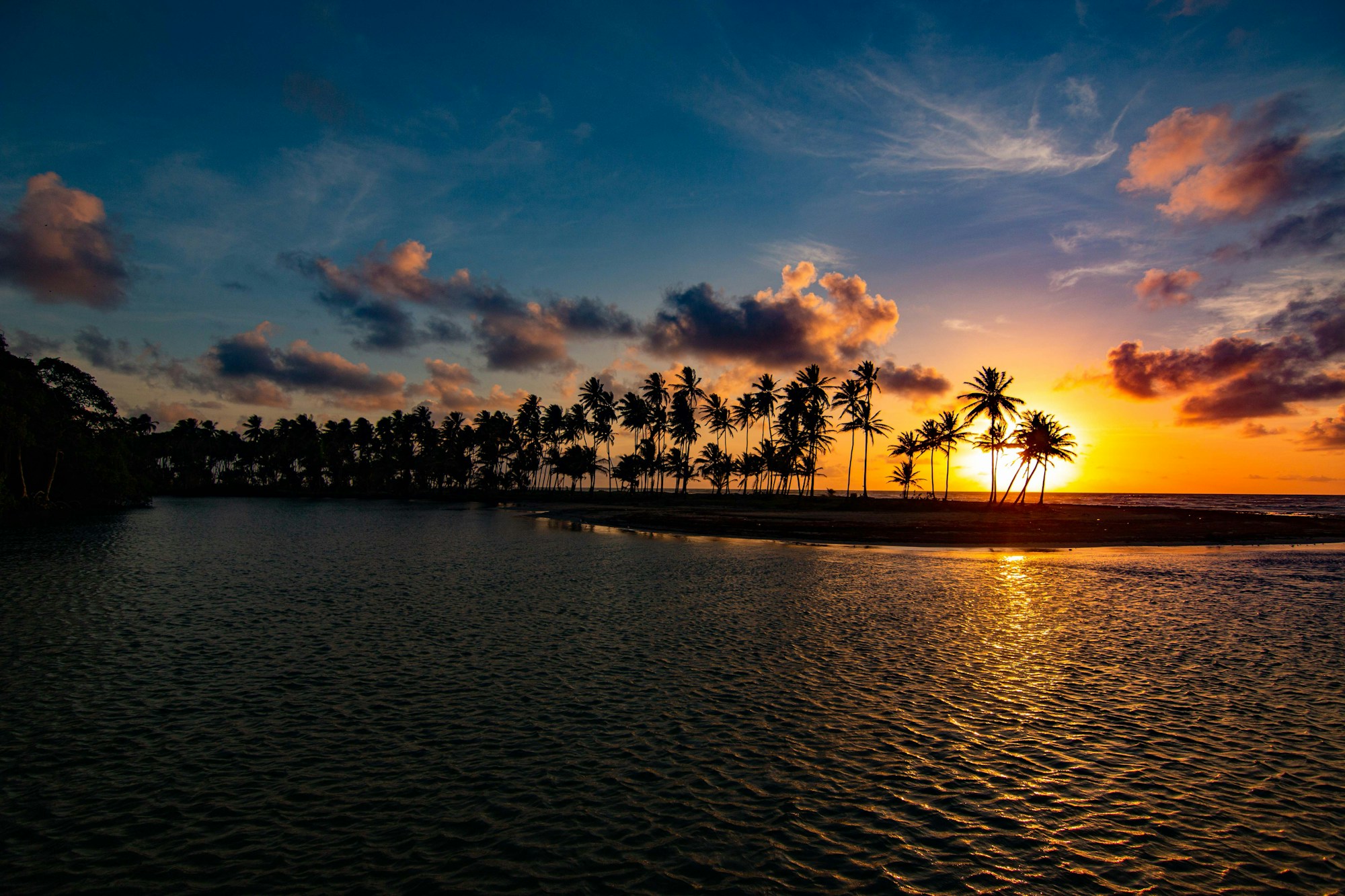
Sunset on Costa Rica's Caribbean coast, where a jungle-covered point curves out into water so calm it barely breaks. This is the side of the country that runs on reggae and coconut milk, where the rainforest grows right down to the sand and the day ends without anyone checking a watch.
Understanding the Microclimates: When and Where to Go
Timing is everything, but "everything" depends on where you stand. Costa Rica doesn't have four seasons; it has the "Dry Season" (the dryer months run from November to late April) and the "Green Season" (May to November). However, the country is home to five distinct microclimates, and its rugged topography means the weather is never uniform across the country at any one time.
The Pacific Coast follows the rules: it's sunny and dry in the winter, making it the peak tourist season. The Caribbean Coast, conversely, plays by its own logic. When the rest of the country is soaking in October rains, the Caribbean often enjoys a "mini-summer" of clear skies and calm water. Then there are the Highlands, like Monteverde, where it can be chilly and misty year-round.
If you want blue skies and don't mind crowds, aim for January. If you want lush, neon-green landscapes, cheaper prices, and don't mind a daily afternoon thunderstorm, the Green Season is a hidden gem. Rain in Costa Rica isn't a "washout"- it's a dramatic, cooling event that brings the jungle to life.
The Wild Heart: Unmissable Wildlife and Nature Encounters
1. Tortuguero National Park: The "Amazon" of Costa Rica
Imagine a place where there are no cars, only canals. Tortuguero, located on the northern Caribbean coast, is accessible only by boat or small plane. It is a labyrinth of black-water lagoons and ancient forests that feels like a scene from Jurassic Park.
The draw here is the water. You don't hike Tortuguero; you paddle it, whether by canoe or peaceful paddleboarding through the mangroves. Taking a silent electric boat or a kayak through the narrow channels allows you to get incredibly close to caimans, river otters, and the elusive green macaw. But the park's namesake -Tortuga - is the real star. From July to October, thousands of Green Sea Turtles return to these beaches to lay their eggs. Watching a prehistoric creature emerge from the surf under the moonlight is a spiritual experience that dwarfs any standard zoo visit.
2. Manuel Antonio: Where the Jungle Meets the Sea
If Tortuguero is the wild frontier, Manuel Antonio National Park is the greatest hits album. Manuel Antonio National Park sits within UNESCO's Savegre Biosphere Reserve, a remarkably biodiverse landscape connecting mountain watersheds with the central Pacific coast. It is the most popular national park in the country for a reason: it packs an incredible amount of wildlife into a relatively small area, all bordered by white-sand beaches that look like postcards.
Within an hour of walking the park's well-maintained trails, you are almost guaranteed to see three-toed sloths, toucans, white-faced capuchin monkeys, and perhaps a troop of endangered squirrel monkeys. The transition from dense canopy to the turquoise waters of the Pacific is seamless. The key here is to arrive early - right at opening - to beat the heat and the crowds. Once you've spotted your quota of wildlife, you can spend the afternoon lounging on Playa Manuel Antonio, arguably one of the most beautiful beaches in Central America.
3. Corcovado National Park: Deep Diving into Biodiversity
For the true nature purist, Corcovado is the holy grail. Located on the remote Osa Peninsula, National Geographic once described it as "the most biologically intense place on Earth in terms of biodiversity." This is not a casual stroll; it is an immersion.
To visit Corcovado, you must have a certified guide, and the journey usually involves a boat ride from Sierpe or Drake Bay. Once inside, you are in the realm of the tapir, the scarlet macaw, and the jaguar. It is one of the few places left where you can see all four species of Costa Rican monkeys in a single afternoon. The sheer scale of the trees and the density of the undergrowth make you feel small in the best possible way. It's raw, it's sweaty, and it's utterly unforgettable.
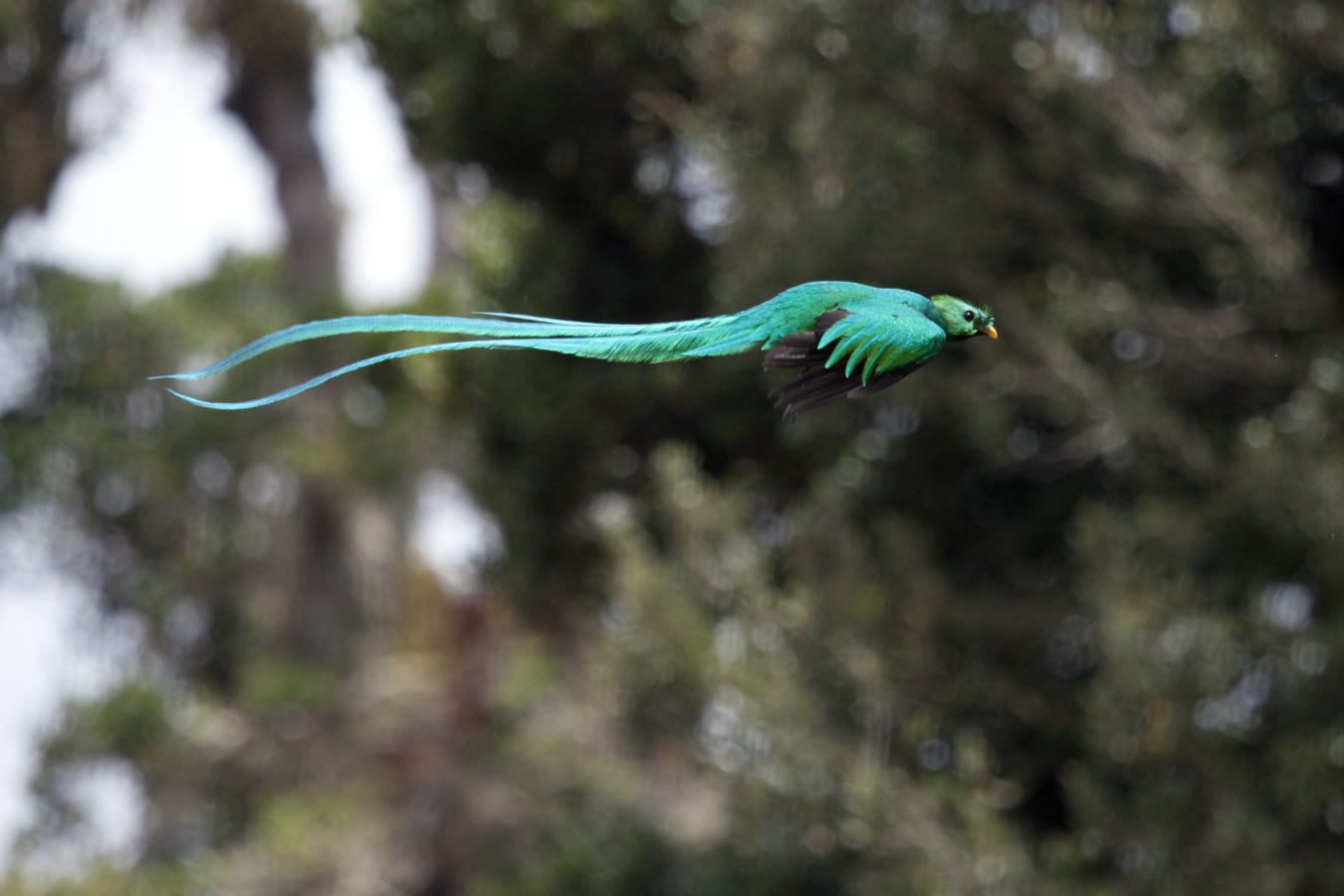
A resplendent quetzal streams through the canopy near Senda Monteverde, one of the best places in Costa Rica to spot the cloud forest's most famous bird.
4. Birdwatching in the Cloud Forests of Monteverde
As you climb into the Tilarán Mountains, the air turns crisp and the humidity transforms into a persistent, ethereal mist. This is the Monteverde Cloud Forest. While the rainforest is about density, the cloud forest is about layers. Every branch is draped in moss, orchids, and bromeliads, creating a vertical garden that reaches hundreds of feet into the air.
Birdwatchers from around the globe flock here for one reason: the Resplendent Quetzal. With its vibrant green plumage and long, flowing tail feathers, it was considered sacred by the Aztecs and Mayans. Beyond the Quetzal, you'll find hummingbirds of every iridescent hue darting around feeders at the park entrance. Walking across the famous Mistico Hanging Bridges allows you to see the forest from the perspective of the birds, looking down into a canopy that feels like a sea of broccoli.
5. Whale Watching in Marino Ballena National Park
Nature has a sense of humor, and Marino Ballena is the proof. This national park near Uvita is famous for its "Whale Tail" - a natural sandbar and rock formation that, when viewed from above at low tide, looks exactly like a humpback whale's tail.
Poetically, this is exactly where Humpback whales from both the Northern and Southern hemispheres come to breed and nurse their calves. Because these two migrations overlap, Uvita has one of the longest whale-watching seasons in the world (peaking August-October and January-March). Being on a small boat when a mother whale breaches just yards away, crashing back into the water with the force of a falling building, is a visceral reminder of the ocean's power. Want to experience Costa Rica's incredible wildlife firsthand, from nesting sea turtles in Tortuguero to sloths and monkeys? Discover our Costa Rica Family Explorer tour.
See the Costa Rica Family Explorer TourAdrenaline Alley: Peak Adventure Activities
1. Ziplining Through the Canopy (The Birthplace of the Sport)
You can't come to Costa Rica and not zipline. It's like going to Italy and skipping the pasta. While canopy tours exist all over the world now, the modern version of the sport was pioneered in the mountains of Monteverde and the foothills of Arenal.
Modern tours have evolved into multi-hour expeditions. You'll find "Superman" lines at parks like 100% Aventura where you are harnessed face-down to fly over kilometer-long spans, and "Tarzan Swings" that involve a free-fall drop from a platform. There is a specific thrill in zipping through the clouds in Monteverde, where the mist dampens the sound and you emerge from a white cloud into a vista of emerald green. It is the closest a human can get to feeling like a harpy eagle.
2. Whitewater Rafting the Pacuare River
If you ask a local guide for their favorite spot in the country, many will point to the Pacuare River. This isn't just a rafting trip; it's a journey through a deep river gorge lined with primary rainforest and cascading waterfalls.
The Pacuare offers Class III and IV rapids, providing enough heart-pumping action to satisfy adrenaline junkies, but the stretches of calm water in between are just as captivating. You'll float past indigenous Cabécar lands and see herons standing like statues on the riverbanks. Many travelers opt for a two-day trip, staying at a remote eco-lodge accessible only by the river, where you can fall asleep to the sound of the rushing water.
3. Surfing the Legendary Breaks of Santa Teresa and Nosara
Costa Rica is a pilgrimage site for surfers. On the Pacific side, the Nicoya Peninsula offers two distinct vibes. Santa Teresa is the high-energy, trendy sibling - a dusty road lined with world-class cafes and powerful, consistent beach breaks that attract pros and intermediates.
Nosara, specifically Playa Guiones, is the soulful retreat. The waves here are incredibly long and forgiving, making it perhaps the best place in the world to learn how to surf. The town has a strict "no building on the beach" law, meaning your view from the lineup is nothing but palm trees and sky. Whether you are charging a hollow barrel or just trying to stand up for the first time, the warm water and consistent swell make every session feel like a win.
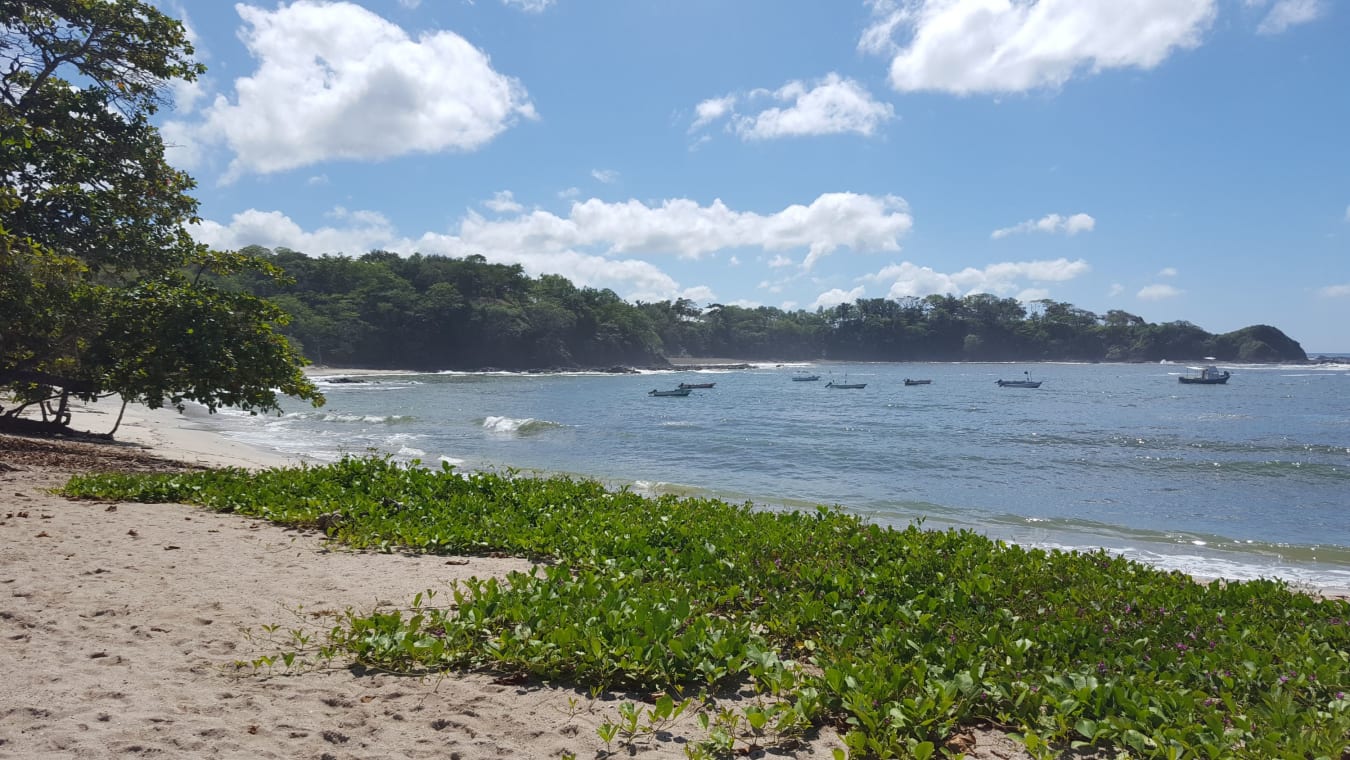
Fishing boats sit at anchor off Santa Teresa, where jungle headlands wrap a quiet bay and the morning catch comes in a few steps from the surf breaks.
4. Hiking the Rugged Slopes of Cerro Chirripó
For those who prefer their adrenaline served with a side of grit, there is Cerro Chirripó. At 12,533 feet, it is the highest peak in Costa Rica. On a clear day, you can see both the Pacific Ocean and the Caribbean Sea from the summit.
This is a strenuous hike - typically 12 to 14 miles uphill to the base camp, followed by a pre-dawn scramble to the peak. You'll pass through "Paramo," a high-altitude shrubland that looks more like the Scottish Highlands than the tropics. It is a test of endurance, but standing on the roof of Central America as the sun breaks over the horizon is a reward that no vehicle can provide.
5. Canyoning and Rappelling Down Hidden Waterfalls
If ziplining is about speed, canyoning is about immersion. In the areas surrounding La Fortuna, Manuel Antonio, and Rincon de la Vieja National Park, you can sign up for tours that take you deep into river canyons for canyoning or river tubing.
You'll be strapped into a harness and taught how to back your way down a vertical rock face while a waterfall crashes over your shoulders. It's a sensory overload - the cold water, the slick rock, and the sheer verticality of the environment. Most tours end with a "monkey drop," a controlled free-fall into a deep pool of water. It is messy, wet, and arguably the most fun you can have in the jungle. Craving more adrenaline? Our Costa Rica Discovery tour packs ziplining, white water rafting, and canyoning into one unforgettable itinerary.
Explore the Costa Rica Discovery TourFire and Water: Volcanoes and Hot Springs
1. Arenal Volcano: The Icon of La Fortuna
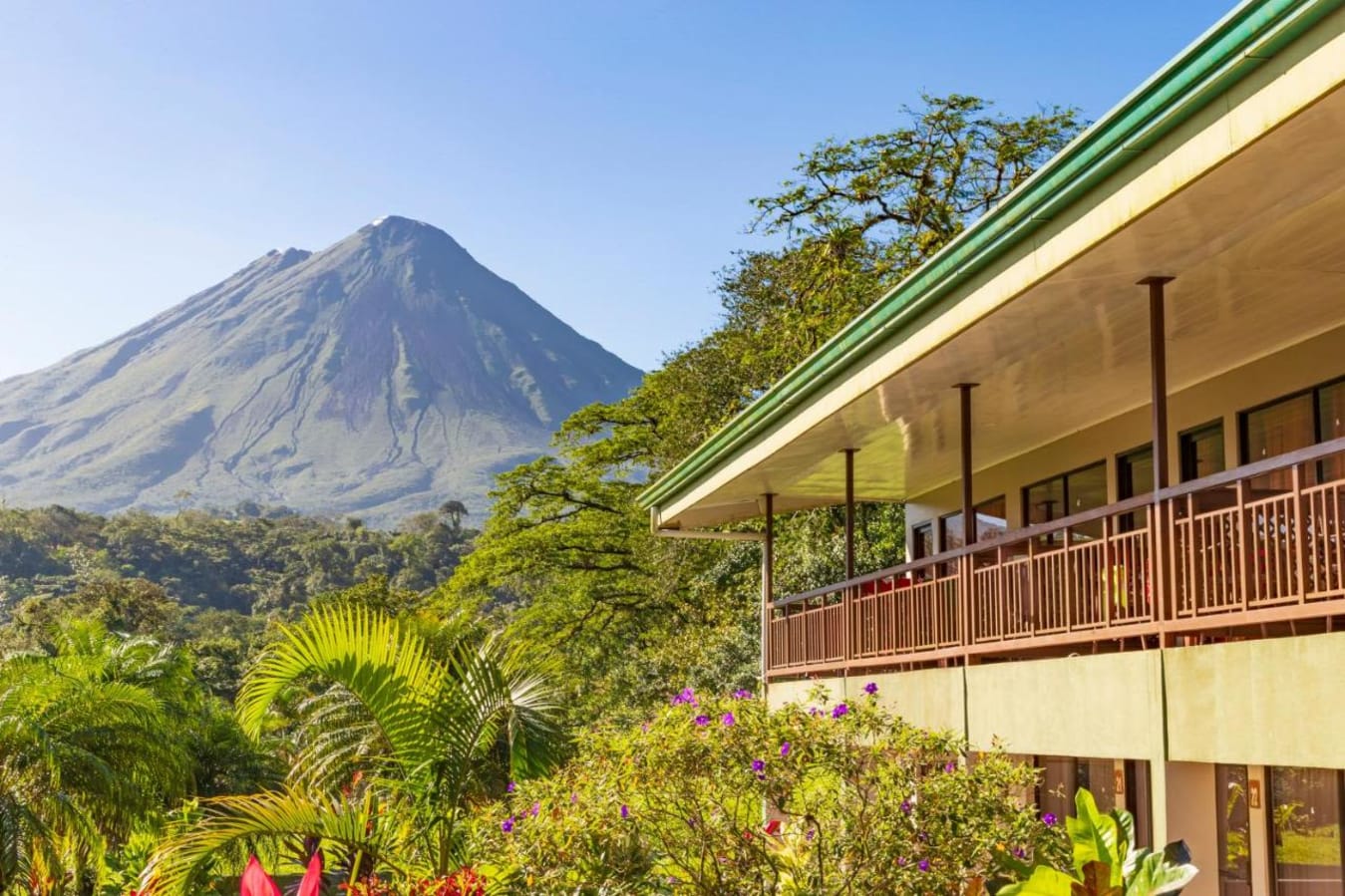
For decades, Arenal was one of the most active volcanoes in the world, famous for its nightly displays of glowing red lava. Though it has remained dormant since 1968, its presence is no less commanding, with only rare rumblings from the sleeping mountain. The perfectly symmetrical cone dominates the skyline of the town of La Fortuna and the shimmering Lake Arenal, serving as a constant reminder of the earth's geothermal power.
Hiking the Arenal 1968 trail or the paths within Arenal Volcano National Park takes you across ancient lava flows - twisted, blackened landscapes where pioneer plants are just beginning to reclaim the soil. The contrast between the dark volcanic rock and the vibrant green forest surrounding it is a photographer's dream. Even without the lava, the energy of the mountain is palpable.
2. Soaking in Natural Thermal Rivers and Luxury Springs
The silver lining of living next to a volcano is the hot springs. The rainwater seeps into the ground, is heated by magma, and re-emerges as mineral-rich thermal water. La Fortuna has turned this into an art form.
You have choices here. On one end, you have the "Free Hot Springs," a local favorite where a warm river flows under a bridge, lit by candles and filled with people enjoying nature's bathtub. On the other end, luxury resorts like Tabacón or The Springs offer manicured gardens, swim-up bars, and cascading pools of varying temperatures. Soaking in 102-degree water while a tropical rainstorm cools your face is the ultimate Costa Rican reset.
3. Poás and Irazú: Peering Into Active Craters
Not all volcanoes require a view from a distance, as seen with the accessible Poas Volcano. Near the capital of San José, home to the historic National Theater, Poás and Irazú offer the rare chance to drive almost to the rim of an active crater.
Poás is famous for its massive acidic crater lake, which glows an otherworldly turquoise and emits plumes of sulfuric steam. Irazú, the highest active volcano in the country, feels like a lunar landscape. Its summit is often above the clouds, providing a stark, desolate beauty that stands in contrast to the lush valleys below. These are easy day trips that offer a high "wow" factor for minimal physical effort.
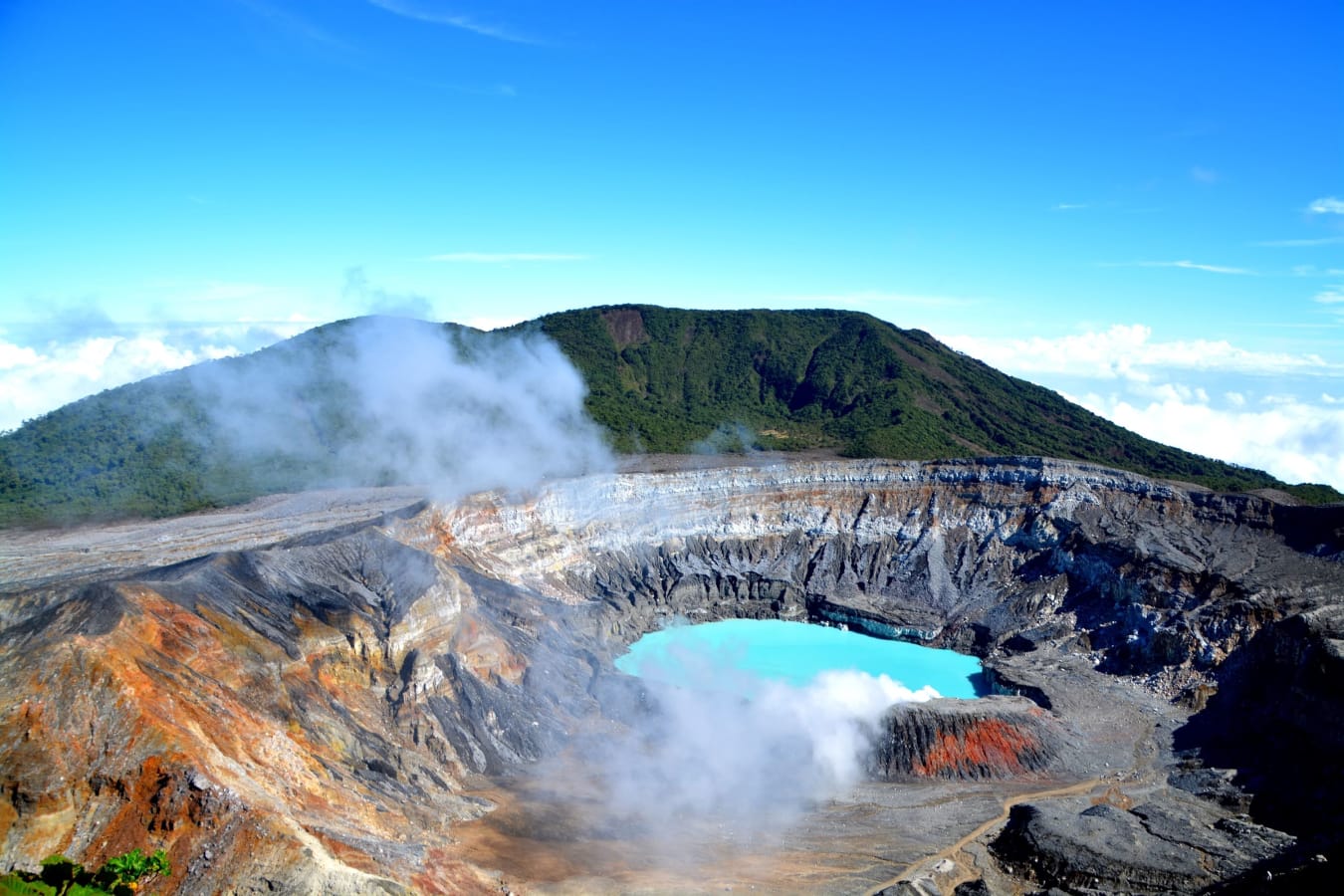
Poas Volcano holds one of the world's largest active craters, a milky turquoise lake that steams and shifts color, reachable by a short walk from the parking area.
4. The Turquoise Magic of Rio Celeste
Located in the Tenorio Volcano National Park, Rio Celeste looks like a Photoshop filter come to life. The river is a brilliant, milky turquoise, a phenomenon caused by a chemical reaction between volcanic minerals at the confluence of two clear streams (a spot aptly named Los Teñideros, or "The Dyers").
The hike to the waterfall is moderately challenging, especially if it has rained recently and the trail is muddy, but the sight of that blue water or the nearby La Fortuna waterfall tumbling over a cliff into a deep pool is one of the most iconic images of Costa Rica. Note: while the water looks inviting, swimming is prohibited within the national park to protect the delicate mineral balance.
The Path Less Traveled: Off-the-Beaten-Path Gems
1. The Southern Zone: Dominical and Uvita
While the northern Pacific gets the lion's share of tourists, the Southern Zone (the Costa Ballena) feels like the Costa Rica of thirty years ago. The mountains here drop precipitously into the sea, draped in primary rainforest.
Dominical is a rugged surf town with a "no shoes, no problem" attitude and a beach lined with giant palm trees. A few miles south, Uvita offers a slightly more polished experience but remains grounded in nature. This region is for those who find the resorts of Guanacaste too sterile. It's a place of dirt roads, hidden waterfalls (like the stunning Nauyaca Waterfalls), and a pace of life that forces you to slow down.
2. The Nicoya Peninsula's "Blue Zone" Secrets
The Nicoya Peninsula is one of only five "Blue Zones" in the world - places where people statistically live longer, often surpassing 100 years of age. While the surfers have claimed the coast, the inland villages hold the secrets of longevity: a diet of gallo pinto, corn, and beans, hard physical labor, and strong community ties.
Exploring towns like Hojancha, horseback riding, or visiting the smaller beaches like San Juanillo and Samara allows you to see a side of Costa Rica that isn't built for tourists. It's a land of cattle ranches and sabaneros (cowboys). Visiting a local soda (a small family-run eatery) in these areas gives you a taste of the authentic, unhurried Costa Rican soul.
3. Exploring the Talamanca Mountains and Indigenous Cultures
High in the Talamanca Range, the Bribri and Cabécar indigenous groups maintain their traditions and languages.
Visiting an indigenous community, such as those near Yorkin on the Caribbean side, requires a dugout canoe trip and a willingness to step outside your comfort zone. You can learn about traditional chocolate making through an authentic chocolate tour (which the Bribri consider sacred), join a local cooking class to learn about medicinal plants, and explore the complex cosmology of the Talamanca people. It is a humbling reminder that Costa Rica's history runs much deeper than its modern tourism industry.

Cloud forest blankets the Talamanca Mountains, the rugged range along Costa Rica's southern spine where Bribri and Cabecar communities have kept their languages and traditions alive.
Sun, Sand, and Salt: Coastal Life
1. The Gold Coast: Guanacaste's Best Beaches
Guanacaste is known as the Gold Coast for two reasons: its consistently sunny weather and its golden sands. This is the driest part of the country, featuring a unique tropical dry forest ecosystem.
If you want the full resort experience, Peninsula Papagayo is home to some of the most luxurious hotels in the world. If you want a lively beach town with great nightlife, Tamarindo or Jaco is your hub, located just a short drive from the famous crocodile bridge over the Tarcoles River. However, for those willing to drive a bit further, beaches like Playa Hermosa, Playa Grande, Playa Conchal (made of crushed seashells), and Playa Flamingo offer calmer waters and spectacular snorkeling. Guanacaste is the easy choice for those who want guaranteed sun and high-end amenities.
3. Exploring the Talamanca Mountains and Indigenous Cultures
High in the Talamanca Range, the Bribri and Cabécar indigenous groups maintain their traditions and languages.
Visiting an indigenous community, such as those near Yorkin on the Caribbean side, requires a dugout canoe trip and a willingness to step outside your comfort zone. You can learn about traditional chocolate making through an authentic chocolate tour (which the Bribri consider sacred), join a local cooking class to learn about medicinal plants, and explore the complex cosmology of the Talamanca people. It is a humbling reminder that Costa Rica's history runs much deeper than its modern tourism industry.
Sun, Sand, and Salt: Coastal Life
1. The Gold Coast: Guanacaste's Best Beaches
Guanacaste is known as the Gold Coast for two reasons: its consistently sunny weather and its golden sands. This is the driest part of the country, featuring a unique tropical dry forest ecosystem.
If you want the full resort experience, Peninsula Papagayo is home to some of the most luxurious hotels in the world. If you want a lively beach town with great nightlife, Tamarindo or Jaco is your hub, located just a short drive from the famous crocodile bridge over the Tarcoles River. However, for those willing to drive a bit further, beaches like Playa Hermosa, Playa Grande, Playa Conchal (made of crushed seashells), and Playa Flamingo offer calmer waters and spectacular snorkeling. Guanacaste is the easy choice for those who want guaranteed sun and high-end amenities.
2. The Caribbean Vibe: Puerto Viejo and Cahuita
Crossing the mountains to the Caribbean coast feels like entering a different country. The Spanish influence fades, replaced by a vibrant Afro-Caribbean culture. The rhythm of life is set to reggae and calypso, and the air smells like coconut milk and ginger.
Puerto Viejo de Talamanca is the heart of this region. It's a colorful, slightly chaotic town where bicycles are the primary mode of transport. South of town, the beaches of Cocles, Punta Uva, and Manzanillo are breathtaking - jungly, wild, and golden. Nearby Cahuita National Park offers a flat, easy coastal trail where you can spot sloths in the trees and snorkel over a coral reef just offshore.
3. Scuba Diving and Snorkeling at Isla del Caño
While Costa Rica's land-based wildlife gets all the press, the underwater world is equally impressive. Isla del Caño, or Caño Island, located off the coast of the Osa Peninsula, is a biological reserve often called a "mini-Galapagos."
The waters here are incredibly clear, and because it's a protected area, the fish populations are massive. Divers and snorkelers can expect to see schools of thousands of jacks, reef sharks, sea turtles, and manta rays. During the migration seasons, you might even hear the haunting songs of humpback whales while you are underwater. It is the premier spot for marine encounters in the country. Dreaming of days spent between the jungle and the sea? Check out our Beaches of Costa Rica tour for the ultimate coastal escape.
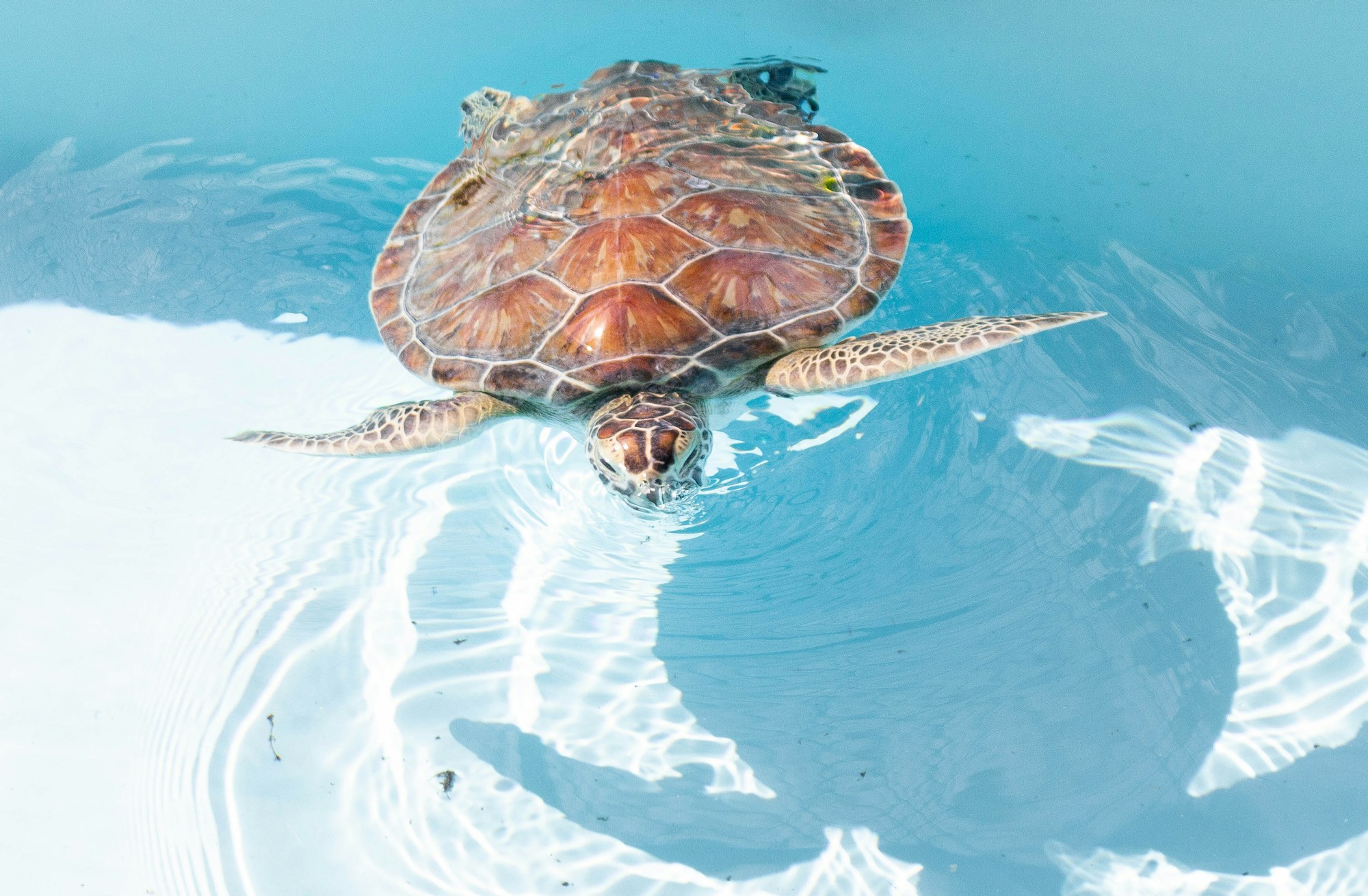
Green sea turtles nest at Tortuguero from July to October, returning to the same Caribbean beaches where they hatched in the hemisphere's largest green turtle rookery.
Responsible Travel: Keeping Costa Rica Green
Understanding Sustainable Tourism Certifications
Costa Rica takes "Green" seriously. The ICT (Costa Rican Tourism Institute) has a rigorous Certification for Sustainable Tourism (CST). When booking hotels or tour operators, look for the CST "leaf" rating. A 5-leaf rating means the business is doing everything from composting and using solar power to actively participating in local reforestation. Supporting these businesses ensures that your tourist dollars are helping, not hurting, the environment.
Wildlife Etiquette: Look, Don't Touch
It is tempting to want a selfie with a sloth or to feed the monkeys that hang around your hotel balcony. Don't do it. Feeding wildlife disrupts their natural diet and makes them dependent on humans, often leading to aggressive behavior or illness.
Furthermore, Costa Rica has strict laws against touching or handling wild animals. Keep a respectful distance, use your zoom lens, and remember that you are a guest in their home. The goal is to leave the animals as wild as you found them.
Supporting Local Communities
Sustainability isn't just about trees; it's about people. Try to eat at locally owned sodas rather than international chains. Hire local guides - their knowledge is superior, and the income stays within the community. Shop at farmers' markets (ferias) for your snacks. By spreading your spending across small, local businesses, you contribute to the social fabric that makes Costa Rica so welcoming in the first place.
Final Thoughts: Embodying the Pura Vida Spirit
Costa Rica is a place that rewards the flexible. You might plan for a sunny hike and get a downpour. You might set out to see a sloth and end up watching a troop of capuchins steal your neighbor's mango. You might get a flat tire on a dirt road and find yourself sharing a beer with a local who stops to help.
The secret to a successful Costa Rican journey is to embrace these moments. The "Pura Vida" spirit isn't just about the beauty of the landscape; it's about the resilience and optimism of the people. When you stop worrying about the schedule and start looking at the richness of the present moment, you've truly arrived. So, pack your rain jacket, leave your stress at the airport, and get ready to discover why this tiny country has such a massive heart. Pura Vida! Ready to start planning? Our team of travel specialists would love to connect and craft your perfect Costa Rica adventure. Get in touch with us today.
Start Planning Your Costa Rica Trip