

The Ultimate Argentina Travel Guide:
Must-See Sights & Hidden Gems
Argentina is not a country you simply visit; it is a country you experience with your whole heart. Stretching from the tropical jungles of the north to the jagged, sub-antarctic peaks of the south, it occupies a space in the imagination that few other nations can match. It is a place where the air smells of roasting meat and woodsmoke, where the music carries a melancholic yearning, and where the landscapes are so vast they make you feel both incredibly small and vibrantly alive.
Argentina: A Land of Striking Contrasts and Soulful Culture
Imagine standing at the edge of a thundering waterfall in a humid rainforest one day, and three days later, trekking across a turquoise glacier while the wind howls off the Andes Mountains. That is the reality of traveling through Argentina. It is a land of extremes, not just in geography, but in spirit. You will find European sophistication in the grand boulevards of its cities and rugged, frontier grit at a traditional estancia in its rural outposts.
Why Argentina Should Be Your Next Adventure
If you are a traveler who craves diversity and adventure travel, Argentina is your playground. It offers world-class trekking that rivals the Himalayas, a wine culture that gives Bordeaux a run for its money, and a capital city that never sleeps. But beyond the landmarks, you should go for the people. Argentines are fiercely passionate, incredibly welcoming, and possess a resilient joy that is contagious. Whether you are sharing a mate with a local in the mountains or debating football in a city cafe, you will find that the soul of the country lies in its social fabric.
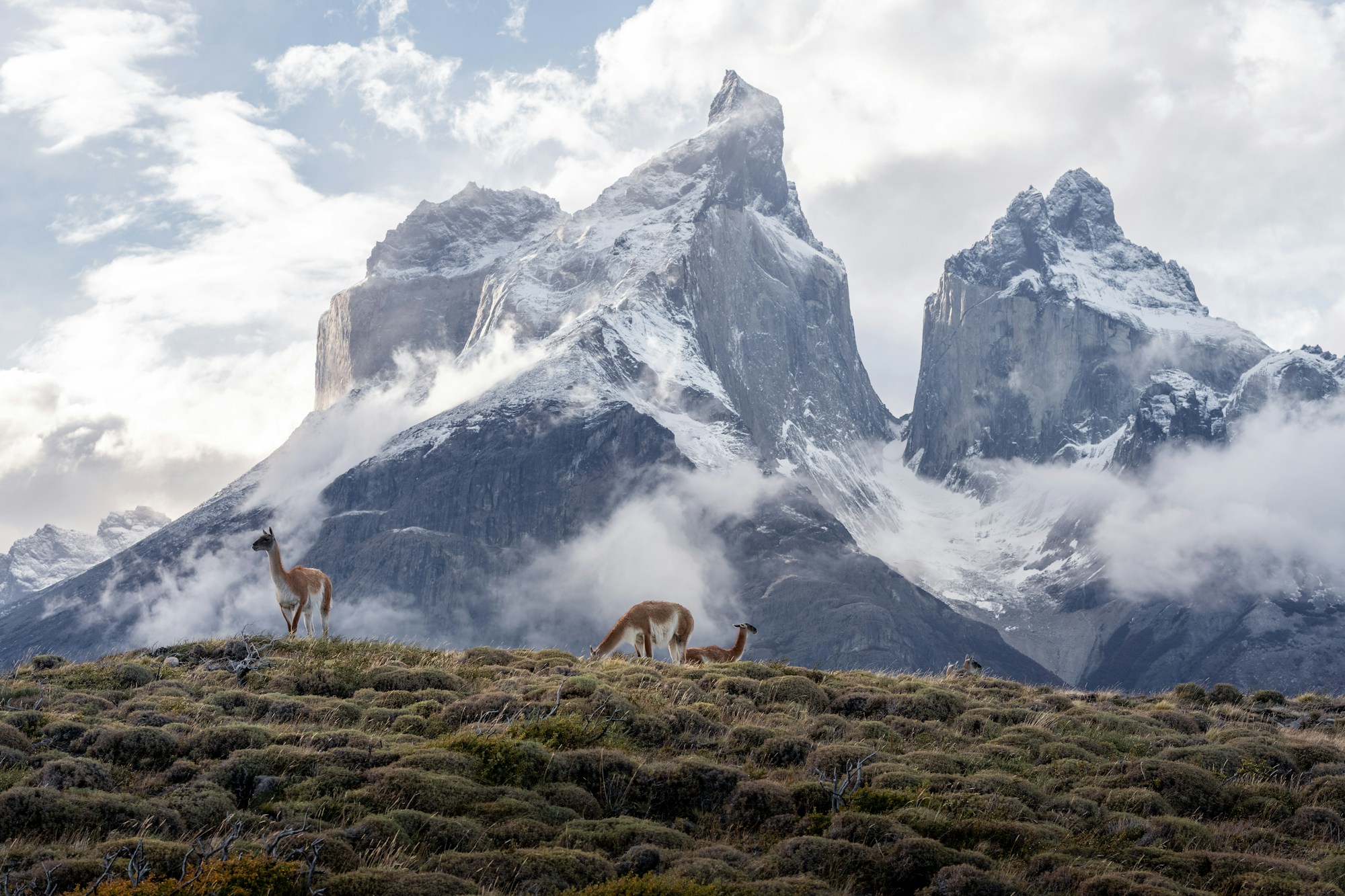
Alpacas graze on a grassy hilltop with the Andes Mountains behind them. The domesticated herds are a common sight on the high pastures that run along the range.
Understanding the "Blue Dollar" and Practical Logistics
Before you pack your bags, we need to talk about the "Blue Dollar." Argentina's economy is a bit of a rollercoaster, and this has created a dual exchange rate. The official rate is what you get at a bank or ATM, but the "Blue Dollar" is an informal market rate that often gives you significantly more pesos for your USD or Euro.
Historically, travelers brought crisp, high-denomination USD bills to exchange at cuevas (small exchange houses). However, recent changes allow foreign credit cards to use a preferential rate (the MEP rate) that is close to the blue rate. Always check the current situation before you fly, but the takeaway is simple: Argentina can be incredibly affordable if you know how to handle your currency. As for logistics, remember that Argentina is the eighth-largest country in the world. You cannot "do" it all in two weeks. Pick two or three regions and dive deep rather than spending your whole vacation in airport lounges.
Buenos Aires: The Pulse of the Pampas
Buenos Aires is often called the "Paris of the South," but that description feels reductive once you've walked its streets. It has the grandeur of Europe, yes, but it beats with a distinctively Latin heart in neighborhoods like La Boca, creating a city of distinct barrios, each functioning like a small city-state with its own personality.
The Grandeur of Recoleta and Palermo
Start your journey in Recoleta. This is where you'll find the iconic Recoleta Cemetery, a city of the dead where the elite, including Eva Perón are interred in ornate marble mausoleums. The surrounding streets are lined with French-style palaces, manicured parks, and cultural landmarks like the iconic Teatro Colón.
Just a short ride away is Palermo, the city's creative engine. It is split into Palermo Soho (boutiques and street art) and Palermo Hollywood (bars and media studios). This is the place to get lost in a labyrinth of cobblestone streets, stopping for a flat white at a specialty cafe or browsing for high-end leather goods. Palermo is where the modern Argentine "cool" lives and breathes.

Recoleta in Buenos Aires, Argentina. The neighborhood is known for its French-style palaces, manicured parks and the ornate marble mausoleums of its cemetery.
San Telmo: Cobblestones, Antiques, and Sunday Markets
San Telmo is the oldest neighborhood in the city, and you can feel the history in your bones here. The crumbling colonial facades and dim-lit bars feel like a movie set. If you are there on a Sunday, the Feria de San Telmo is non-negotiable. The market stretches for blocks, selling everything from vintage siphons to handcrafted jewelry. It is crowded, loud, and utterly exhilarating.
The Birthplace of Tango: Finding an Authentic Milonga
Tango was born in the bordellos and tenements of Buenos Aires, and while flashy dinner shows are available, they aren't where the magic happens. To see the real deal, you need to head to a milonga, a local dance hall.
Places like La Viruta or Salon Canning offer a glimpse into a ritual that has remained unchanged for decades. You'll see grandmothers dancing with teenagers, all following the silent language of the cabeceo (a nod of the head to invite a partner). Even if you don't dance, sitting on the sidelines with a glass of red wine, watching the intense connection between dancers, is a spiritual experience.
A Feast for the Senses: Navigating the Parrillas (Steakhouses)
In Argentina, steak isn't just food; it's a religion. The parrilla is the altar. When you walk into a place like Don Julio or La Cabrera, you aren't just ordering dinner; you are participating in a tradition.
Order a bife de chorizo (sirloin) or ojo de bife (ribeye), but don't ignore the starters. The provoleta, a thick slab of provolone cheese grilled until the outside is crispy and the inside is molten, is mandatory. Wash it all down with a Malbec, and you'll understand why Argentines take their three-hour dinners so seriously. Craving a taste of Buenos Aires, Iguazú, Mendoza, and Patagonia all in one trip? Explore our Argentina Explorer tour and start planning your adventure.
See Argentina in One TripIguazú Falls: Nature's Greatest Spectacle
Deep in the subtropical north, where Argentina meets Brazil and Paraguay, lies Iguazú Falls. Eleanor Roosevelt famously looked at these falls and remarked, "Poor Niagara." She wasn't exaggerating. Iguazú is a system of 275 individual drops, spanning nearly two miles in width.
The Brazilian Side vs. The Argentine Side
A common debate among travelers is which side is better. The answer is both, but they offer different things. The Brazilian side provides the "postcard" view: a panoramic perspective that allows you to see the sheer scale of the falls. The Argentine side, however, is where you get your boots wet. About 80% of the falls are on the Argentine side, and an extensive network of walkways allows you to walk over, under, and right into the spray of the water.
The Devil's Throat: Getting Up Close to the Power
The climax of the Argentine side is the Garganta del Diablo (Devil's Throat). A long walkway leads you across the river to the very edge of a massive, U-shaped chasm where half of the river's flow plunges into a misty abyss. The roar is deafening, and the sheer volume of water is enough to make your knees weak. It is a humbling reminder of the raw power of the natural world.
Exploring the Rainforest: Wildlife and Catwalks
Beyond the water, the surrounding Iguazú National Park is a lush Atlantic rainforest. Keep your eyes peeled for coatis (mischievous, raccoon-like creatures) and toucans. If you're lucky, you might spot a caiman near the water's edge. The park is well-organized with a small jungle train that transports you between the different trail circuits, making it accessible for all fitness levels.
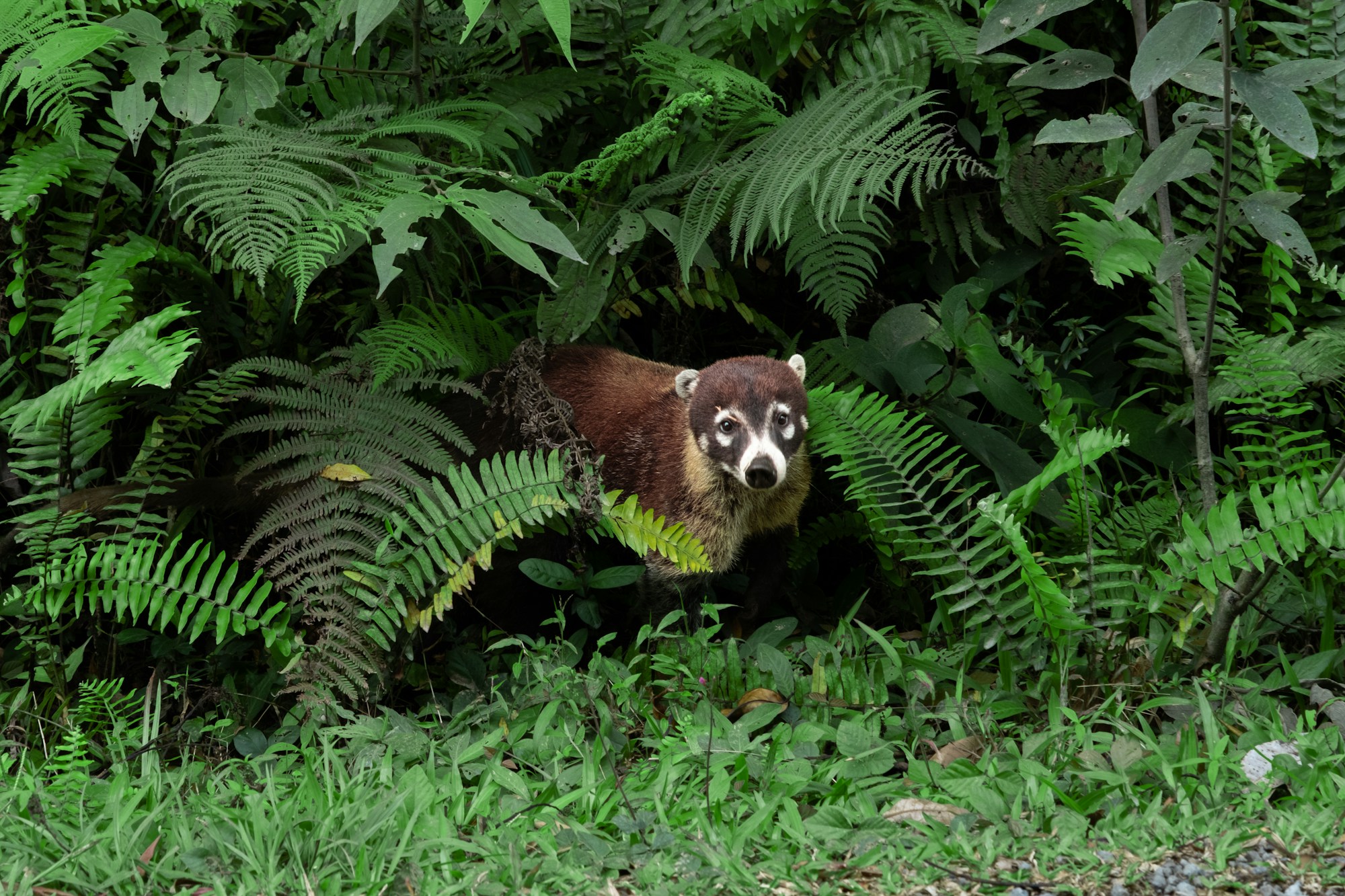
Coatis are raccoon-like mammals with long snouts and banded tails. They forage in bands on the forest floor and are one of the animals most often seen along rainforest trails.
Fell in love with Iguazú and want to see even more of Argentina's wild side? Check out our Wild Argentina trip for an unforgettable journey from the falls to Patagonia's coast.
Take Me to Argentina's Wild SideThe Lake District: Bariloche and Beyond
Traveling south to Northern Patagonia, the landscape shifts from jungle to alpine. This is the Lake District, a region of glacial lakes that look like spilled ink and mountains covered in ancient forests.
San Carlos de Bariloche: Chocolate, Lakes, and Swiss Vibes
Bariloche feels like a slice of Switzerland dropped into the Andes, much like the German-influenced pockets found near Córdoba. The architecture is heavy on stone and wood, and the city is famous for its chocolate shops. Walking down Calle Mitre, you'll be tempted by the scent of cocoa at every turn. But the real draw is the outdoors. Take the chairlift up Cerro Campanario for a view that National Geographic once ranked as one of the top ten in the world: a dizzying vista of interconnected lakes and snowy peaks.
Driving the Seven Lakes Road (Camino de los Siete Lagos)
One of the most iconic road trips in South America, this 107-kilometer stretch of Route 40 connects the towns of Villa La Angostura and San Martín de los Andes. As the name suggests, you will pass seven distinct lakes, each with a different hue ranging from emerald to deep navy. It's a drive that should take two hours but will inevitably take all day because you'll want to stop every ten minutes for a photo or a picnic.
Villa La Angostura: The Hidden Gem of the North
While Bariloche is the bustling hub, Villa La Angostura is its sophisticated, quieter sibling. It is a refined village nestled on the shores of Lake Nahuel Huapi. It is the gateway to the Arrayanes Forest, home to rare, cinnamon-colored trees that are said to have inspired the forest in Disney's Bambi. It's the perfect place to slow down, rent a cabin with a fireplace, and breathe in the crisp mountain air.
Mendoza: A Toast to the Andes
If you are a wine lover, Mendoza is your pilgrimage site. Located in the shadow of Mount Aconcagua (the highest peak in the Western Hemisphere, this high-altitude desert has been transformed into one of the world's premier wine regions through an ingenious irrigation system dating back to the indigenous Huarpe people.
The High-Altitude Malbec Experience
Malbec originated in France, but it found its true expression in the sun-drenched, rocky soils of Mendoza. The intense UV radiation at this altitude produces grapes with thick skins and concentrated flavors. A tasting here isn't just about sipping wine; it's about understanding how the "terroir", the sun, the wind, and the snowmelt from the Andes, finds its way into your glass.
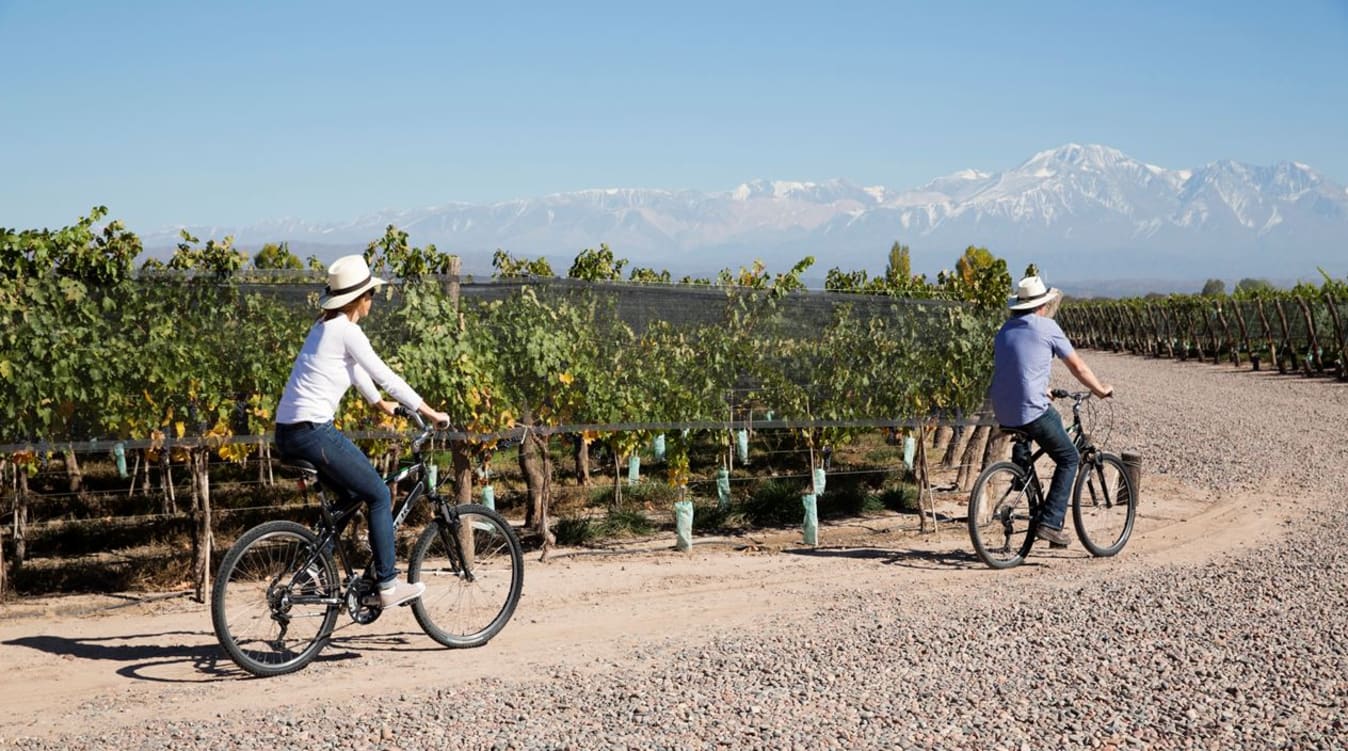
Biking a vineyard in Mendoza, Argentina. Bodegas sit close enough together to pedal between several in a day.
Biking Through the Vineyards of Luján de Cuyo and Maipú
One of the most joyful ways to experience Mendoza is on two wheels. In the regions of Maipú and Luján de Cuyo, you can rent a bike and pedal from one bodega to another. There is something profoundly liberating about cycling down dusty, tree-lined avenues with the Andes towering in the distance, stopping for a tasting and a plate of empanadas before heading to the next vineyard. Just remember to pedal responsibly!
Uco Valley: Luxury Wineries with a Mountain Backdrop
For those seeking a more high-end experience, the Uco Valley is the frontier of Argentine winemaking. Located about 90 minutes south of the city, this region is home to architectural marvels: wineries that look like modern art galleries or ancient temples. The wines here are more structured and elegant, and many bodegas offer multi-course lunches paired with their top labels. Dining alfresco with a view of the Andes is a "pinch-me" moment you won't soon forget.
Patagonia: The Wild Frontier
Patagonia is not a place you visit; it's a place that changes you. It is a vast, wind-swept wilderness at the bottom of the world, where nature remains the undisputed boss.
El Calafate and the Perito Moreno Glacier
The gateway to Southern Patagonia and Los Glaciares National Park is El Calafate. While the town is charming, everyone is here for one thing: the Perito Moreno Glacier. Unlike most glaciers connected to the southern icefields, Perito Moreno is not retreating; it is in a state of equilibrium, constantly advancing.
Standing on the viewing platforms, you can hear the ice "groan" and "crack" like a gunshot. If you wait long enough, you'll witness "calving", when massive chunks of ice break off and crash into the lake below. For the adventurous, you can put on crampons and actually hike across the surface of the glacier, finishing the trek with a glass of whiskey cooled by ancient ice.
El Chaltén: The Hiking Capital of the World
A three-hour drive from El Calafate lies El Chaltén, a tiny village that exists solely for trekking. There is no cell service in the mountains and no pretension in the town. Everyone is here to walk. The beauty of El Chaltén is that the trailheads start right at the edge of town. You don't need a shuttle; you just lace up your boots and start climbing.

Laguna de los Tres below Mount Fitz Roy, near El Chaltén. The glacial lagoon sits at the end of a full-day trek.
Mount Fitz Roy and Laguna de los Tres
The crown jewel of El Chaltén's dramatic mountain ranges is the hike to Laguna de los Tres. It is a grueling, full-day trek, but the reward is a front-row seat to Mount Fitz Roy, a jagged granite spire that pierces the clouds. Below the peak sits a glacial lagoon of an impossible blue. It is a challenging hike, especially the final kilometer of steep switchbacks, but reaching the top is a rite of passage for any serious traveler.
Ready to stand beneath Mount Fitz Roy yourself? Our Heart of Patagonia trip brings you face to face with this iconic peak.
Trek Beneath Fitz Roy YourselfThe End of the World: Ushuaia and the Beagle Channel
Further south still is Ushuaia, the southernmost city in the world. Located on the island of Tierra del Fuego, it feels like the true end of the earth. From here, you can sail the Beagle Channel, passing islands covered in sea lions and penguins, and seeing the iconic "Les Eclaireurs" Lighthouse. It is a place of moody weather, haunting history, and the starting point for expeditions to Antarctica
Want to explore Ushuaia, Tierra del Fuego, and penguin colonies for yourself? Check out our Patagonia & Penguins trip.
The Northwest: Salt Flats and Rainbow Mountains
Many travelers overlook the Argentine Northwest (NOA), which is a mistake. This region feels more like the Andean highlands of Bolivia or Peru. It is a land of red rock canyons, indigenous traditions, and high-altitude deserts.
Salta "La Linda" and Colonial History
The city of Salta, nicknamed "The Beautiful," is the best-preserved colonial city in Argentina. Its central plaza is vibrant, and its museums house fascinating history, including the "Children of Llullaillaco", perfectly preserved Incan mummies found at the summit of a nearby volcano. At night, Salta comes alive in peñas, local folk music clubs where people sing, play the guitar, and dance the chacarera.
The Humahuaca Gorge: Purmamarca and Tilcara
Heading north from Salta, you enter the Quebrada de Humahuaca, a UNESCO World Heritage site. The highlight is the village of Purmamarca, which sits at the base of the Cerro de los Siete Colores (Hill of Seven Colors). The layers of sediment create a natural rainbow in the rock. Nearby Tilcara offers impressive pre-Inca ruins and a laid-back, dusty atmosphere that feels miles away from the modern world.
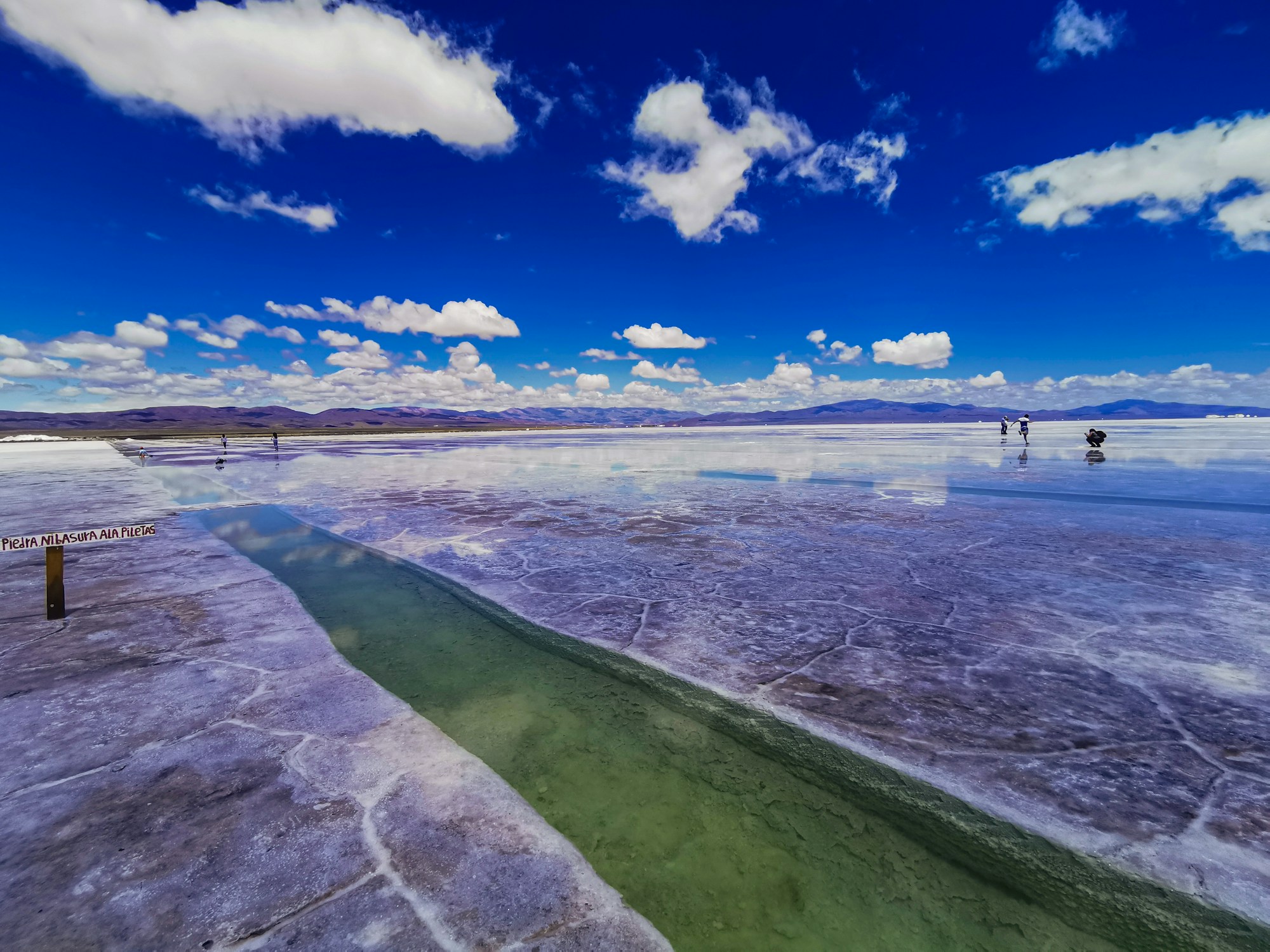
The Salinas Grandes salt flat in northwest Argentina. The cracked hexagonal crust sits high on the puna.
Salinas Grandes: Argentina's Expansive Salt Desert
High on the puna (the high-altitude plateau) lies the Salinas Grandes. This vast white salt flat reflects the sun with blinding intensity. Walking across the cracked white hexagonal patterns under a deep blue sky is a surreal experience. It's a place of silence and scale, where your sense of perspective is completely warped.
Argentina's Best Kept Secrets (The Hidden Gems)
If you want to get off the beaten path, Argentina has plenty of corners where few tourists tread.
Iberá Wetlands: South America's Version of the Pantanal
Located in the northeast, the Esteros del Iberá are one of the largest freshwater wetlands in the world. It is a paradise for wildlife lovers. You can take boat safaris to see thousands of caimans, capybaras (the world's largest rodent), and over 350 species of birds. It is an intimate, quiet alternative to the more famous wetlands in Brazil.
El Bolsón: Hippie Culture and Hops
Just south of Bariloche lies El Bolsón, a town that became a refuge for hippies in the 1970s. Today, it retains that bohemian spirit, famous for its organic markets, artisan crafts, and most importantly its hops. Most of Argentina's hops are grown here, making it a hub for the country's burgeoning craft beer scene.
Puerto Madryn: Whales, Penguins, and Marine Wildlife
On the Atlantic coast of Patagonia lies Península Valdés, also known as the Valdes Peninsula. Between June and December, Southern Right Whales come here to mate and give birth. You can see them from the shore or take a boat to watch them breach just meters away. The area is also home to massive colonies of Magellanic penguins and elephant seals.

Magellanic penguins on the Patagonian coast. They nest in burrows in large colonies through the spring and summer.
Culinary Traditions You Can't Miss
You will not go hungry in Argentina. While the beef is legendary, the culinary landscape is rich with regional specialties and sweet treats that define the daily rhythm of life.
Beyond Steak: Empanadas, Humita, and Locro
Every region has its own empanada recipe. In Salta, they are small, spicy, and baked; in Tucumán, they are juicier and often fried. You should also try humita, a mixture of fresh corn, cheese, and spices wrapped in a corn husk and steamed. In the winter, look for locro, a hearty stew of corn, beans, and meat that is the ultimate comfort food.
The Ritual of Mate: How to Drink Like a Local
You will see Argentines carrying a thermos and a gourd everywhere. This is mate (pronounced MAH-tay), a bitter herbal tea. It is more than a drink; it is a social glue. Sharing a mate involves a specific set of rules: one person (the cebador) prepares and pours it, and you pass it around a circle. Never stir the straw (bombilla), and only say "thank you" when you've had enough and don't want any more.
Sweet Endings: Alfajores and Dulce de Leche
Argentines have a massive sweet tooth, and dulce de leche (a thick caramel made from sweetened milk) is the centerpiece. You'll find it inside alfajores, shortbread cookie sandwiches dipped in chocolate or powdered sugar. They are the perfect accompaniment to an afternoon coffee.
Find Your Perfect Argentina Adventure
Planning Your Trip: Essential Tips for Motivated Travelers
The Best Time to Visit Each Region
Because Argentina is so large, the "best time" depends on where you are going.
- Buenos Aires: Spring (Oct-Nov) or Fall (April-May) when the weather is mild and the jacaranda trees are blooming.
- Patagonia: Summer (December-March). Most hiking trails are closed in winter.
- Iguazú & The Northwest: Winter (June-August) to avoid the stifling summer heat and humidity.
Navigating Domestic Flights
Argentina's distances are simply too great for buses to be practical (a bus from BA to Bariloche takes 22 hours), so we don't organize or recommend long-distance bus travel; domestic flights are the way to go. Aerolíneas Argentinas has the most extensive network and is consistently the most reliable choice. Low-cost carriers like FlyBondi may look tempting on price, but frequent delays and cancellations make them unreliable, so we always recommend booking with Aerolíneas Argentinas instead.
Safety, Language, and Etiquette
Argentina is generally safe for travelers, though petty theft can happen in busy parts of Buenos Aires, keep your phone tucked away and your bag in front of you.
Spanish is the language, but Argentine Spanish (Rioplatense) has a unique "Italian" cadence and uses vos instead of tú. A little effort goes a long way. Argentines are polite and formal; greeting people with a "Buen día" and a single kiss on the cheek (even between men in social settings) is the norm.
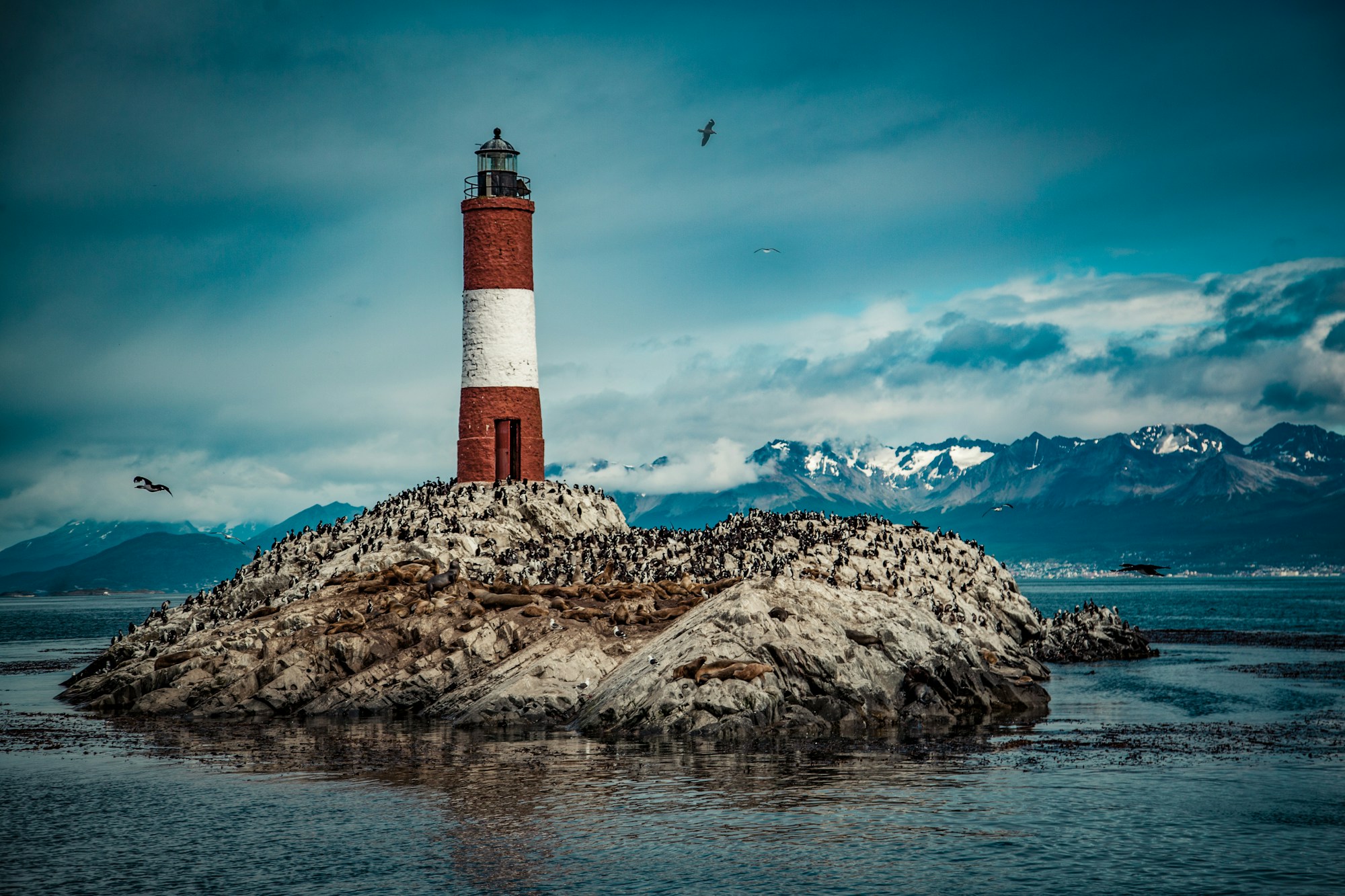
A red and white lighthouse on a rocky islet in Argentina. Cormorants and sea lions crowd the rock below it.
Final Thoughts: Embracing the "Mañana" Mentality
In Argentina, things don't always run on time. The flight might be delayed, the protest might block the road, or the dinner might not start until 10:00 PM. The secret to enjoying this country is to let go of your rigid schedule and embrace the mañana mentality.
Stop worrying about the clock and focus on the conversation. Order that second bottle of Malbec. Stay at the milonga until the sun comes up. Argentina is a country that rewards the patient, the curious, and the hungry. If you approach it with an open heart and a sense of adventure, it will give you memories that last a lifetime. ¡Buen viaje!
Ready to start planning? Our team would love to connect. Contact us today and let's build your perfect Argentina adventure together.
Start Planning Your Argentina Trip