

Buenos Aires:
The Cosmopolitan Heart of Argentina
Step off the plane in Buenos Aires and you’ll instantly sense that this cosmopolitan city operates on its own unique frequency. Grand European boulevards lined with jacaranda trees meet an unmistakable Latin American energy, and the result is a place steeped in culture unique to this extraordinary country. Known as the “Paris of South America,” Buenos Aires earned its nickname in the late nineteenth and early twentieth centuries, when European architects were brought in to design grand public squares, opera houses, and residential boulevards. Yet Buenos Aires is far more than a European echo; it’s distinctly South American: passionate, romantic, and endlessly alive.
Locals, known as porteños, move through the city with warmth and flair, lingering over espresso, greeting friends with a cheek kiss, and dining well past nightfall. To enjoy Buenos Aires the way it’s meant to be enjoyed, let go of a strict itinerary. This is a city best experienced at its own rhythm, ideally with a knowledgeable local guide who can lead you beyond the guidebook.
A Brief History of Buenos Aires
Buenos Aires was founded in 1580 along the Rio de la Plata, but it spent its early centuries as a sleepy colonial backwater, overshadowed by the silver-rich cities of the Andes. That changed dramatically in the late nineteenth century, when a boom in beef and grain exports, combined with a massive wave of immigration from Italy, Spain, and beyond, transformed the city almost overnight into one of the wealthiest capitals in the world. Fortunes made on the Pampas were poured into the grand European-style architecture that still defines the city today. Tango emerged around the same period in the working-class port neighborhoods, blending African, European, and criollo influences into a new art form that would eventually conquer ballrooms worldwide. The twentieth century brought dramatic swings, including the populist rise of Juan and Eva Perón, decades of political instability, and periods of economic crisis, but through it all, Buenos Aires retained its distinct cultural identity. Today, that layered history is visible everywhere, from the Belle Epoque mansions of Recoleta to the working-class tango halls of La Boca, giving the city a depth that rewards curious travelers.

Four balconies on a building facade in Buenos Aires. Balconies like these line the residential streets of the city's older barrios, a legacy of its European-influenced architecture.
Neighborhoods to Explore
Buenos Aires’ soul is found in its distinct barrios, each with its own personality.
Palermo is the city’s largest and most vibrant neighborhood. Palermo Soho charms with tree-lined streets, boutique shops, and artisan cafes, while Palermo Hollywood has emerged as a culinary hotspot, home to acclaimed restaurants like Don Julio and inventive takes on the traditional steakhouse.
Recoleta carries an air of timeless elegance. Broad avenues like Avenida Alvear are lined with French-style mansions and luxury boutiques, and the neighborhood sits within easy reach of cultural landmarks including the Museo Nacional de Bellas Artes and the MALBA museum.
San Telmo is the city’s oldest neighborhood, full of cobblestone streets, antique shops, and traditional tango bars, a bohemian, deeply historic enclave anchored by the always-lively San Telmo Market.
Villa Crespo, just southwest of Palermo, offers a genuine glimpse of local life away from the crowds, with a beloved leather district along Calle Murillo and an appealing mix of classic delis and new natural wine bars.
La Boca, the birthplace of tango, is where you’ll find the colorful houses and lively street performances of El Caminito, just blocks from the iconic La Bombonera stadium. It’s best explored during the day, when the neighborhood’s artistic energy is on full display.
Puerto Madero offers a different side of the city entirely. Once a disused dockyard, this waterfront district has been transformed into a gleaming promenade of restored brick warehouses, glass skyscrapers, and riverside walkways, with the striking Puente de la Mujer footbridge as its centerpiece. It’s a relaxed spot for an evening stroll or a meal with views over the water, and a nice contrast to the historic barrios nearby.
Ready for more of Argentina? Our Explore Argentina tour pairs Buenos Aires with Iguazu Falls, Mendoza wine country, and glacier trekking in El Calafate.
Must-See Cultural Stops
No visit is complete without a walk through Recoleta Cemetery, an extraordinary open-air museum of marble mausoleums where notable Argentines, including Eva Perón, are laid to rest. Book lovers shouldn’t miss El Ateneo Grand Splendid, a stunning bookstore set inside a beautifully preserved 1919 theater, or Teatro Colón, one of the world’s great opera houses, renowned for its acoustics and architectural grandeur. On Sundays, the San Telmo Fair transforms Calle Defensa into a mile-long celebration of antiques, live music, and tango performed right on the cobblestones.
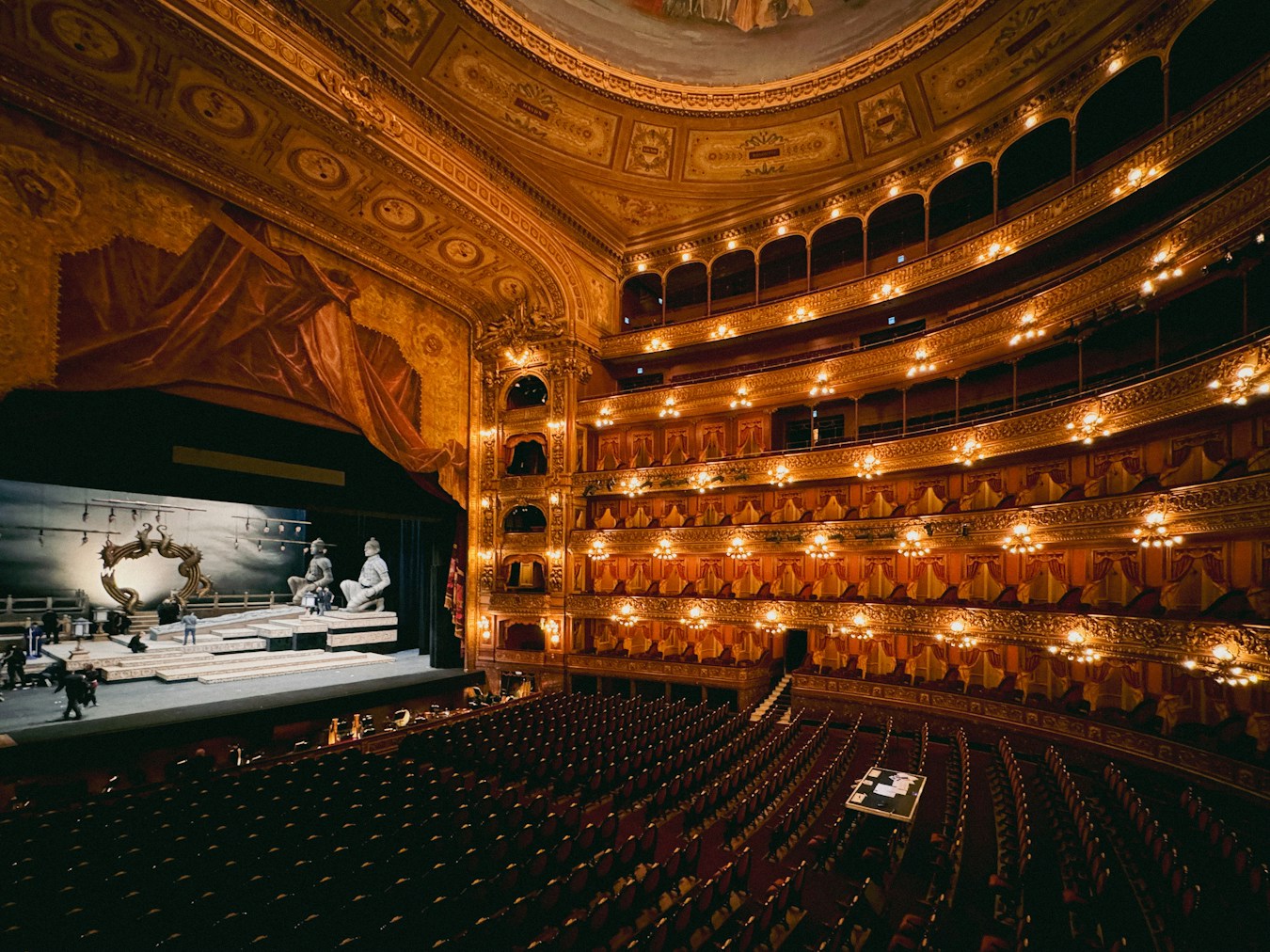
Teatro Colón in Buenos Aires, one of the world's great opera houses. The building is known for its acoustics and for the grandeur of its architecture.
Want a local expert to help plan your own Buenos Aires adventure? Contact us to start building an itinerary around the museums, theaters, and markets you care about most.
Plan My Buenos Aires ItineraryHistoric Landmarks in the City Center
A short walk from the barrios brings you to Plaza de Mayo, the civic heart of Buenos Aires since colonial times. Here you’ll find Casa Rosada, the pink presidential palace where Eva Perón famously addressed crowds from the balcony, along with the city’s Metropolitan Cathedral. A stroll down Avenida de Mayo leads to two more downtown icons: Palacio Barolo, an eccentric early-twentieth-century tower inspired by Dante’s Divine Comedy, and Café Tortoni, the city’s oldest café, where writers and artists have gathered since 1858. From here it’s a short walk to the Obelisco, the towering monument anchoring Avenida 9 de Julio, one of the widest avenues in the world. History lovers can round out the day with a short trip to Palermo’s Museo Evita, a museum dedicated to the life of Eva Perón, housed in a beautifully restored mansion.
Art and Street Culture
Buenos Aires’ art scene extends well beyond its grand theaters and historic collections. The Museo de Arte Latinoamericano de Buenos Aires, known by its acronym MALBA, holds one of the finest collections of twentieth-century Latin American art anywhere, with rotating exhibitions that pair beautifully with a morning spent among Recoleta’s other cultural institutions. Just as compelling, though far less formal, is the city’s street art scene: enormous, vividly colored murals cover building facades throughout Palermo, Villa Crespo, and the southern neighborhood of Barracas, many created by internationally recognized muralists during Argentina’s street art boom of the 2000s. A guided street art walk is a wonderful way to see a side of the city that rarely makes it into guidebooks, winding through back streets to spot political commentary, whimsical characters, and large-scale portraits painted directly onto crumbling colonial facades. Taken together, the formal galleries and the informal open-air scene reveal just how seriously Buenos Aires takes its identity as a creative capital.
Parks and Green Spaces
For a break from the city’s energy, Buenos Aires offers some lovely green escapes, most of them clustered around Palermo. The Bosques de Palermo park system includes the fragrant Rosedal, or Rose Garden, along with paddleboat lagoons and jogging paths shaded by old rubber trees. Nearby, the Jardín Japonés, a serene Japanese garden built to celebrate Japanese-Argentine friendship, offers koi ponds, a teahouse, and one of the most peaceful settings in the city. Just across the avenue, the Floralis Genérica, a gleaming steel flower sculpture that opens and closes with the sun, has become an unofficial symbol of modern Buenos Aires and a popular photo stop. Together, these green spaces offer a welcome, unhurried counterpoint to the busy streets and grand plazas found elsewhere in the city.
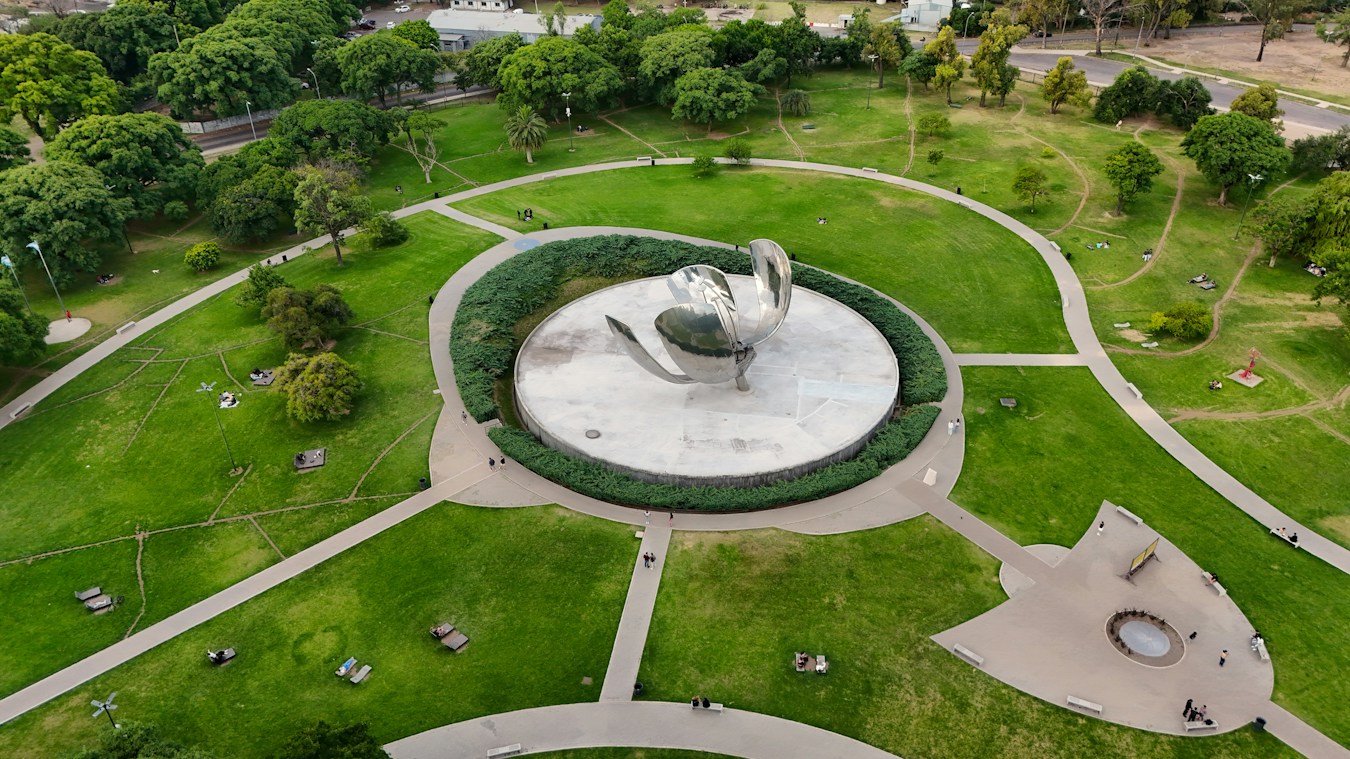
The Floralis Genérica in Buenos Aires, a large steel flower sculpture set near the Palermo parks. Its petals open and close with the sun, and it is a popular photo stop.
Fútbol Fever: Boca Juniors and River Plate
Football is a way of life in Buenos Aires, and no rivalry captures that passion like the one between Boca Juniors and River Plate. Known as the Superclásico, it’s considered one of the fiercest sporting rivalries in the world, and even a regular-season match at La Bombonera delivers deafening chants, flares, and a sea of blue and gold. If a match falls during your visit, it’s well worth attending, the atmosphere is unlike anything else, and a bit of context beforehand helps you understand the traditions behind the songs and rituals that make Argentine fútbol so distinct.
Shopping and Markets
Buenos Aires rewards travelers who like to shop, with everything from high-end leather boutiques to sprawling weekend markets. In Villa Crespo’s leather district along Calle Murillo, factory outlets sell jackets, bags, and boots at a fraction of what you’d pay abroad, often from the same tanneries that supply major international brands. Palermo Soho’s boutique-lined streets are perfect for browsing independent designer clothing, jewelry, and home goods, while San Telmo is the place for antiques: on Sundays, the neighborhood’s cobblestoned Plaza Dorrego anchors the San Telmo Fair, where vendors spread out vintage cameras, old soda siphons, and secondhand books alongside tango memorabilia. Book and record collectors should also make time for Parque Rivadavia’s weekend market, a local favorite that draws far fewer tourists than San Telmo. Wherever you shop, a bit of gentle bargaining is normal at outdoor markets, though fixed-price boutiques expect you to pay the sticker price.
Eating and Drinking Like a Porteño
Argentina’s world-class beef, raised on the vast plains of the Pampas, takes center stage at the parrilla, where cuts like ojo de bife (ribeye), bife de lomo (tenderloin), and tira de asado (short ribs) are slow-grilled over wood embers and finished with fresh chimichurri. Beyond beef, don’t miss empanadas, milanesas, and the city’s cherished Italian-influenced pizza tradition, especially the Fugazzeta.
Save room for something sweet: dulce de leche appears in nearly every dessert, and the alfajor is the essential local treat. Round it out with a visit to one of the city’s historic cafes, where a cortado or café con leche is best enjoyed slowly, alongside a medialuna. Thanks to generations of Italian immigration, Buenos Aires also has a serious ice cream culture, and a scoop of dulce de leche granizado from a classic heladeria is a perfect way to cool off between sightseeing stops.
Buenos Aires is also a great place to explore Argentina’s wine country without leaving the capital. High-altitude Malbec is the star, but look for Cabernet Franc and the aromatic white Torrontés as well, both delicious ways to preview the flavors of Mendoza.
Craving more of Argentina’s wild side? Our Wild Argentina tour takes you from Iguazu Falls to the wetlands of Ibera and the penguins of Puerto Madryn.
Feel the Rhythm: Tango in Buenos Aires
Tango is woven into the identity of Buenos Aires, and visitors have two rewarding ways to experience it. A tango show is one of the most memorable ways to spend an evening: stage productions at venues like El Querandí, Rojo Tango, or the famed Piazzolla Tango pair a multi-course dinner with a dazzling, theatrical performance from professional tango dancers, a fitting introduction for first-time visitors. For a more intimate look at the dance, a milonga such as La Viruta or El Beso offers a chance to watch, or with a beginner lesson join, locals dancing purely for the love of it. Either way, tango in Buenos Aires comes down to what you’re after, a dazzling spectacle or an intimate dance floor, so it helps to get a recommendation tailored to your interests.

A tango dinner show at El Querandí in Buenos Aires. Stage productions like this one pair a multi-course dinner with a performance by professional tango dancers.
Dreaming of your own tango night in Buenos Aires? Contact us to help plan the perfect mix of shows, milongas, and local experiences for your trip.
Plan My Tango Night in Buenos AiresNightlife: Bars, Boliches, and Live Music
Porteños famously eat and go out late, and the city’s nightlife rarely gets going before midnight. Palermo Soho and Palermo Hollywood are packed with stylish bars and speakeasy-style cocktail spots, many hidden behind unmarked doors, while rooftop bars in Puerto Madero and Recoleta offer skyline views over a glass of Malbec. For live music, keep an eye out for jazz clubs and folk peñas, and don’t be surprised to stumble across a spontaneous milonga in a plaza. If dancing isn’t your thing, a boliche, or nightclub, is the local answer to a big night out, with most not filling up until well after 1 a.m. Whatever night you choose, the options range widely, from a quiet wine bar in Villa Crespo to a late-night dance floor in Palermo.
Day Trips from Buenos Aires
If you have an extra day, Buenos Aires makes an easy jumping-off point for excursions into the surrounding countryside. Board a boat from Puerto Madero to the Tigre Delta, a maze of rivers and subtropical islands lined with weekend houses, where a leisurely lunch on the water makes for a relaxing half-day escape. For a taste of another country entirely, a high-speed ferry across the Rio de la Plata brings you to Colonia del Sacramento, a UNESCO World Heritage town in Uruguay, with cobblestone streets, colonial architecture, and a laid-back pace that feels worlds away from the capital. Travelers looking for a taste of the countryside can also arrange a day at a traditional estancia, where gauchos demonstrate horsemanship and asado is grilled over an open fire, a vivid preview of the rural traditions found throughout Argentina.
Where to Stay: Choosing Your Neighborhood
Where you base yourself can shape your whole trip, since Buenos Aires’ neighborhoods each offer a distinct rhythm. Recoleta and Palermo are the most popular choices for first-time visitors: Recoleta feels elegant and central, within walking distance of the cemetery and major museums, while Palermo offers the city’s best restaurants, leafy parks, and easy access to nightlife, making it a favorite among travelers who want to feel like locals. Puerto Madero is the choice for those who prefer a quieter, more modern setting, with high-rise hotels overlooking the river and a strong sense of safety, though it sits a bit farther from the historic center. San Telmo suits travelers chasing atmosphere over polish, with boutique hotels tucked into converted colonial buildings just steps from tango bars and antique shops. Wherever you choose to stay, your Global Basecamps travel specialist can match you with a neighborhood and property that fits your travel style, from boutique luxury to design-forward hotels.
Suggested Itinerary: Making the Most of Your Time
With three or four days in Buenos Aires, you can comfortably cover the highlights without feeling rushed. Day one is ideal for orientation: spend the morning wandering Recoleta and its cemetery, then head into Palermo for lunch and an afternoon browsing Palermo Soho’s boutiques before a parrilla dinner. Day two can be devoted to downtown history, tracing Plaza de Mayo, Casa Rosada, and Avenida de Mayo before an evening tango show. On day three, explore San Telmo’s antique market if it falls on a Sunday, then venture into La Boca for El Caminito and, if the schedule aligns, a Boca Juniors match at La Bombonera. With a fourth day, a day trip to the Tigre Delta or across the river to Colonia del Sacramento in Uruguay makes a memorable finale. Of course, the best itineraries leave room for spontaneity, a lingering coffee, an unplanned milonga, and that is exactly the kind of flexible, expertly guided experience your Global Basecamps travel specialist can help design.
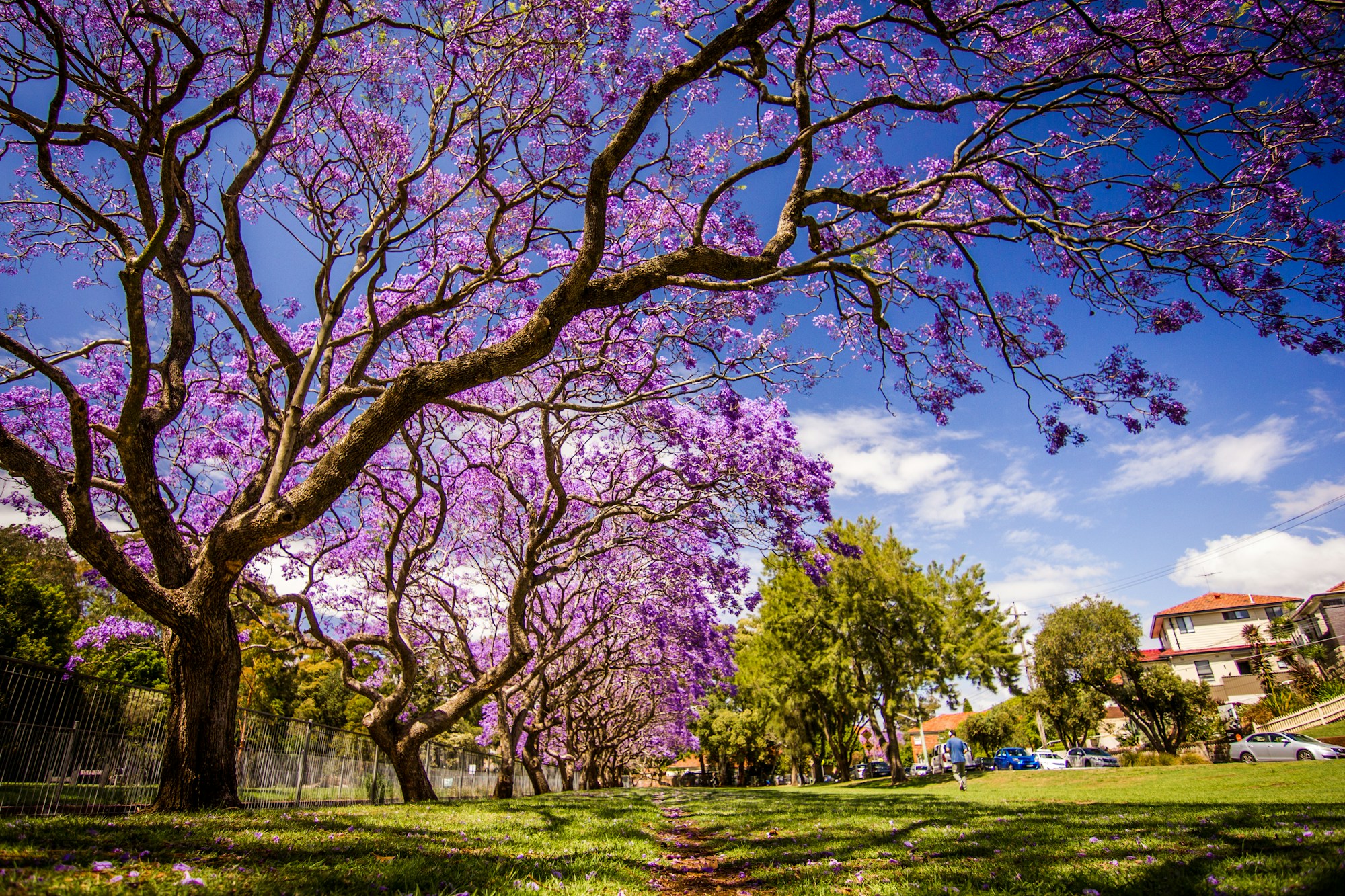
A jacaranda in bloom. The trees flower bright purple across Buenos Aires each spring, roughly late October into December, and shade streets and plazas all over the city.
Good to Know Before You Go
Buenos Aires is a wonderful city to explore, and like any major destination, a little preparation goes a long way. The best times to visit are spring (October to December) and autumn (March to May), when the weather is mild and the city’s jacaranda trees and parks are at their best. As with travel anywhere, we recommend sticking to well-known areas after dark and keeping valuables secure in crowded spots like transit stations. Your Global Basecamps travel specialist and local guides will help you navigate the city with confidence. A modest tip, around 10 percent, is customary at restaurants, and a friendly cheek kiss is the standard local greeting. Getting around is easy: the Subte (subway) is the fastest way to cross the city during the day, while taxis and rideshares are the better choice at night.
Argentina’s currency, the peso, has seen significant fluctuation in recent years, so it’s worth checking current exchange rates before you go. Keep in mind that US dollars are not widely accepted in Buenos Aires, so it’s always best to carry local currency, pesos, on hand. Credit cards are common in restaurants and shops, but always carry cash for markets, taxis, and tips.
Why Buenos Aires Stays With You
Buenos Aires reveals itself slowly, in the aroma of grilled meat, the light filtering through jacaranda blossoms, and the sound of tango drifting through open windows. Settle into its pace, and you’ll understand why travelers leave a piece of their heart behind in this extraordinary city.
No two visits to Buenos Aires look alike, and that’s exactly the point. Some travelers spend their days chasing history through Recoleta and San Telmo, while others prioritize a long lunch at a parrilla followed by an evening milonga, and there’s no wrong way to do it. A local guide can help you weave together the neighborhoods, flavors, and traditions that matter most to you, turning a list of highlights into a trip that feels personal, and your Global Basecamps travel specialist is ready to help build that itinerary from the ground up.
Ready to start planning? Our team would love to connect. Contact us today to start building your custom Argentina itinerary.
Start Planning Your Argentina Trip