
![[descriptive alt with SEO keywords]](https://res.cloudinary.com/oasisapp/image/upload/c_fit,f_auto,q_auto,w_1350/v1/9/argentina/buenos-aires-argentina-caminito-20505 "12 Best Places to Visit in Argentina from Buenos Aires to Patagonia")
12 Best Places to Visit in Argentina
from Buenos Aires to Patagonia
Argentina is not just a country; it is a profound sensory experience that stretches from the subtropical jungles of the north to the sub-antarctic winds of the south. It is a place where European elegance meets raw, untamed wilderness, and where a casual dinner often turns into a three-hour celebration of life. For the first-time traveler, the sheer scale of the country can be intimidating. You are looking at the eighth-largest nation on Earth, a land where landscapes don't just change; they transform entirely.
Whether you are here to dance the tango in a dimly lit Milonga, trek across creaking blue glaciers, or sip world-class Malbec under the shadow of the Andes, Argentina demands your full attention. This guide is designed to help you navigate that vastness, moving beyond the brochures to the heart of what makes this "Land of Extremes" so intoxicating.
Argentina: A Land of Extremes and Elegance
To understand Argentina, you must embrace its dualities. In Buenos Aires, you'll find wide boulevards and ornate balconies that feel like a dream of Paris, yet the city pulses with a grit and passion that is uniquely Latin American. Move a few hundred miles in any direction, and that urbanity vanishes. You are replaced by the towering peaks of the Andes Mountains, the dusty, red-rock canyons of the North, or the desolate, windswept plains of Patagonia.
The "elegance" isn't just in the architecture; it's in the culture. It's in the way an asador meticulously prepares a fire for a Sunday barbecue, or the way a stranger will spend ten minutes giving you directions with the enthusiasm of a long-lost friend. The "extremes" are literal: you can sweat in the humid spray of the world's largest waterfall system one day and zip up a heavy parka to walk on a glacier the next.
Planning Your Argentinian Adventure: The Basics
Before you pack your bags, you need to wrap your head around the logistics. Argentina is a seasonal chameleon, and its economy is famously... colorful. Getting these basics right will save you more headaches than any packing list ever could.

A lone highway threading the red rock canyons of Salta province, where the sandstone glows crimson under storm light and the desert runs to the horizon.
See All Argentina Trips
When to Visit: Navigating the Seasons
Because Argentina is in the Southern Hemisphere, the seasons are inverted. When North America and Europe are shivering in January, Argentines are heading to the beach in coastal hubs like Mar del Plata.
If you want to see Patagonia, the window is narrow: November to March is prime time. Attempting to hike in El Chaltén in July is a recipe for closed trails and frozen toes. Conversely, the northern regions like Salta and Iguazú are best visited during the shoulder seasons (April–June or September–November) to avoid the stifling summer heat and the torrential rains. If you're a skier, July and August are your months for the Andes.
Money Matters: Understanding the Blue Dollar and Currency Exchange
Money in Argentina is a conversation topic at every dinner table. The country operates with a dual exchange rate system. There is the "Official Rate" (what you'll see on Google or at a bank) and the "Blue Dollar" (the unofficial, parallel market rate).
For years, travelers had to bring crisp hundred-dollar bills and swap them at cuevas (small exchange offices) to get nearly double the pesos. Recently, the government introduced a MEP rate for foreign credit cards, which gives travelers a rate close to the Blue Dollar. However, cash is still king in many rural areas. Always bring more US dollars (in pristine condition) than you think you need as a backup.
Getting Around: Domestic Flights
Argentina is massive. To put it in perspective, a bus from Buenos Aires to Ushuaia would take about 40 hours, so we don't organize or recommend long-distance bus travel; domestic flights are your best friend. Aerolíneas Argentinas is consistently the most reliable carrier and connects all the major hubs. Low-cost carriers like FlyBondi can look tempting on price, but frequent delays and cancellations make them unreliable, so we always book with Aerolíneas Argentinas instead. Pro tip: book your flights well in advance, as prices fluctuate wildly and planes fill up fast.
1. Buenos Aires: The Cosmopolitan Heart
Every Argentine journey begins and ends here. Buenos Aires is a city that never seems to sleep, fueled by caffeine and a relentless social calendar. It is a city of "barrios," each with a personality so distinct they feel like different towns.
The Neighborhood Pulse: Palermo, Recoleta, and San Telmo
Palermo is the trendy older sibling, split into Soho and Hollywood, filled with street art, boutique hotels, and the city's best nightlife. It's where you go to see and be seen. Recoleta, by contrast, is grand and wealthy, with an elegant, European air that echoes the city's reputation as the "Paris of South America." It is home to the famous Recoleta Cemetery, where Eva Perón is buried among labyrinthine marble mausoleums.
Then there is San Telmo, the oldest neighborhood. It's a place of cobblestone streets, antique markets, and crumbling colonial mansions. On Sundays, the Plaza Dorrego fills with tango dancers and artisans, capturing the nostalgic soul of the city.

A row of wrought-iron lanterns in red, pink and turquoise juts from walls painted yellow, blue and crimson. Buenos Aires sunlight makes every panel glow.
Essential Experiences: Tango Shows, Parrillas, and Art Museums
You cannot leave Buenos Aires without experiencing a parrilla (steakhouse). Forget everything you know about steak; here, it is a religion. Places like Don Julio (book months ahead) or the more local El Ferroviario offer cuts of beef so tender you can cut them with a spoon.
For Tango, avoid the overly polished "dinner shows" if you want authenticity. Instead, look for a Milonga, a local dance hall where real people go to dance. It's less about the glitter and more about the connection. Finally, dedicate an afternoon to the majestic Teatro Colón or the MALBA (Museum of Latin American Art). It houses iconic works by Frida Kahlo and Diego Rivera, providing a visual history of the continent's tumultuous and beautiful past.
2. Iguazú Falls: Nature's Great Spectacle
Located near the town of Puerto Iguazú in the subtropical northeast corner where Argentina meets Brazil and Paraguay, Iguazú Falls makes Niagara look like a leaky faucet. It consists of 275 individual drops, but it's the sheer volume and the roar of the water that leaves you speechless.
Navigating the Argentine Side vs. the Brazilian Side
There is a long-standing debate about which side is better. The consensus? You need both. The Brazilian side offers the "postcard view," a panoramic sweep that allows you to comprehend the scale of the falls.
The Argentine side, however, is where you get your boots wet. It features an extensive network of walkways that take you over, under, and directly into the heart of the cascades. You'll spend a full day here walking the Upper and Lower circuits, surrounded by lush jungle, coatis (curious raccoon-like animals), and clouds of butterflies.
The Devil's Throat: Getting Up Close to the Cascades
The climax of the Argentine side is the Garganta del Diablo (Devil's Throat). You board a small train that takes you to a long catwalk stretching over the river. As you walk, the sound builds to a low rumble that vibrates in your chest. At the edge, you look down into a horseshoe-shaped abyss where the water crashes with such force that a permanent cloud of mist rises hundreds of feet into the air. It is a humbling display of planetary power. For an even more thrilling perspective, you can take a boat ride right up to the base of the Devil's Throat, where you're guaranteed to get soaked in the spray. This excursion, known as the Gran Aventura, combines a jungle truck ride, a short train journey, and the boat trip into one adrenaline-filled outing.
3. Mendoza: The World-Class Wine Region
Mendoza is a desert turned into an oasis by an ingenious system of irrigation canals dating back to the indigenous Huarpe people. Today, it is synonymous with Malbec, but the region offers far more than just fermented grapes.

A Malbec tasting flight in Mendoza. Glasses are lined up and poured in sequence so visitors can compare several vintages from a single winery side by side.
Luján de Cuyo and Valle de Uco: Where to Sip Malbec
Most visitors start in Luján de Cuyo, just outside the city. It's home to historic wineries with century-old vines. For a more modern, dramatic experience, head 90 minutes south to the Valle de Uco. Here, architectural marvels of wineries sit against the backdrop of the snow-capped Andes. The high altitude and intense sun here produce wines with incredible depth and structure.
Adventure Beyond the Bottle: Biking and Aconcagua Views
If you can tear yourself away from the wine tasting rooms, Mendoza is an outdoor playground. A popular way to see the wineries is by renting a bike in Chacras de Coria, though navigating the dusty roads after a few glasses of wine requires focus! For a bigger thrill, take a day trip to Aconcagua Provincial Park. You won't be summiting the highest peak in the Americas (unless you have three weeks and serious gear), but the hike to the base camp offers staggering views of the 22,837-foot giant. Ready to sip Malbec in Mendoza and trek across a glacier in El Calafate? Check out our Explore Argentina tour for an 8-day journey through Iguazu, Mendoza, and Patagonia.
4. El Calafate: The Gateway to the Glaciers
As you fly south into Patagonia, the landscape flattens into an endless brown steppe until suddenly, the turquoise waters of Lago Argentino appear. This is El Calafate, a town that exists for one primary reason: the glaciers of Los Glaciares National Park.
Perito Moreno: Walking on Ancient Ice
The Perito Moreno Glacier is famous for being one of the world's few advancing glaciers, often celebrated as the largest advancing glacier on the planet. It's a massive wall of blue ice, three miles wide and 200 feet high. The best way to experience it is a "Minitrekking" excursion. They'll strap crampons to your boots and lead you onto the ice itself. Walking over the deep blue crevasses of these massive ice fields and drinking whiskey chilled with 200-year-old glacial ice is a memory that doesn't fade.
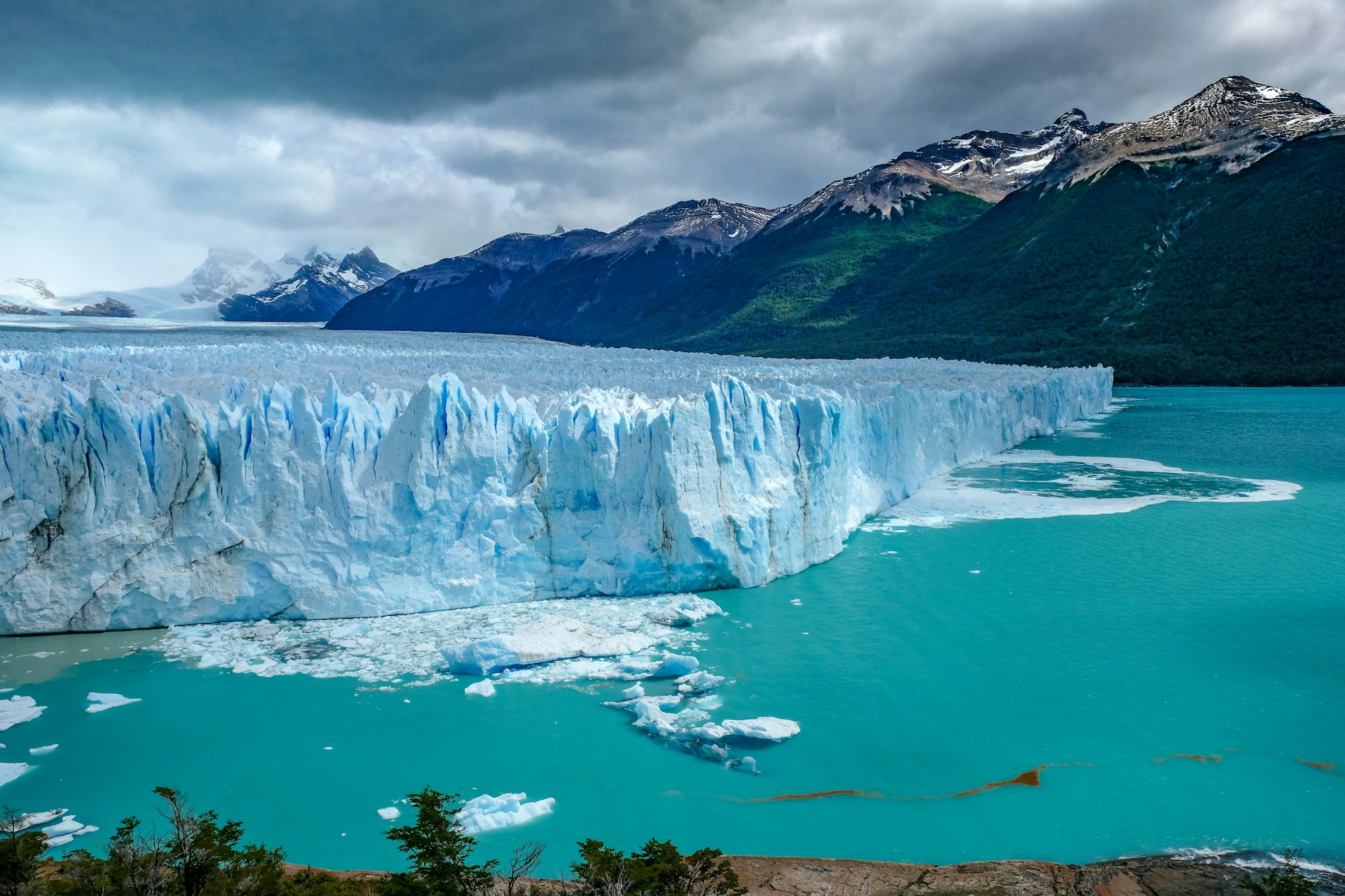
The terminal wall of the Perito Moreno Glacier, three miles wide and 200 feet high, meeting the turquoise water of Lago Argentino. Broken ice floats where chunks have calved off.
Nautical Safaris and Estancia Life
To see the parts of the glacier that aren't accessible by land, hop on a boat for a "Nautical Safari." You'll sail close to the towering ice walls, and if you're lucky, you'll witness "calving," when a house-sized chunk of ice breaks off and crashes into the water with the sound of a cannon shot. To round out the Patagonian experience, visit a local estancia (ranch) like Estancia Cristina to learn about the pioneers who settled this harsh land and enjoy a traditional lamb roast. Want to experience the lakes, glaciers, and peaks of Patagonia for yourself? Take a look at our Best of Patagonia trip.
5. El Chaltén: The Trekking Capital of Argentina
Three hours north of El Calafate lies El Chaltén, a rugged alternative to Chile's Torres del Paine National Park. If Calafate is for sightseeing, Chaltén is for doing. This tiny village is nestled at the base of the Fitz Roy massif, and the vibe here is purely focused on the trail.
The Iconic Fitz Roy Hike
The hike to Laguna de los Tres is the gold standard. It's a challenging 12-mile round trip, with a final, grueling steep kilometer that tests your resolve. But when you crest that final ridge and see the jagged granite spires of Mount Fitz Roy reflected in a glacial lake, every drop of sweat is forgotten. It is, quite simply, one of the most beautiful views on Earth.
Tips for Self-Guided Hiking and Backpacker Culture
What makes El Chaltén unique is that most of the world-class trails start right from the edge of town. You don't need a guide or a shuttle; you just walk out of your hotel and follow the signs. The town is filled with cozy craft breweries and bakeries where hikers congregate in the evenings to swap stories. It's a communal, rugged atmosphere where the weather dictates your schedule, so always check the wind forecast before heading out! Dreaming of hiking beneath Mount Fitz Roy? Our Patagonia Explorer tour takes you from Ushuaia to El Chaltén to El Calafate.
6. Bariloche and the Lake District
Located in the northern reaches of Patagonia, Bariloche feels like a slice of the Alps dropped into South America. Founded by German and Swiss immigrants, the town is famous for its log-and-stone architecture and its obsession with chocolate.

The Civic Center in Bariloche at dusk, built in the log-and-stone alpine style the town is known for. An equestrian statue stands at the center of the plaza.
The "Switzerland of Argentina": Chocolate and Architecture
Walking down the main street, Mitre, you'll be hit by the scent of roasted cocoa. Shops like Mamuschka and Rapa Nui are local institutions. The architecture, particularly the Llao Llao Hotel and the Civic Center, reinforces the European mountain town aesthetic, but the surrounding nature is pure Argentine wild.
Circuito Chico: The Most Scenic Drive in Patagonia
If you have a few hours, the Circuito Chico is a must. This 17-mile loop takes you past hidden beaches, through ancient forests, and up to the Campanario Hill. Take the chairlift to the top of Cerro Campanario; National Geographic once rated the view from here as one of the top ten in the world. You'll see a 360-degree panorama of deep blue lakes (Nahuel Huapi and Perito Moreno) intertwined with dark green peninsulas and snowy peaks.
7. Salta and the Northwest: Canyons and Culture
The Northwest (NOA) is the cultural antithesis of Buenos Aires. Here, the indigenous Andean influence is strong, the music is folk-based, and the landscape looks like the backdrop of a classic Western film.
The "La Linda" Architecture and Peñas
Salta is nicknamed "La Linda" (The Beautiful) for a reason. It boasts the best-preserved colonial architecture in the country. In the evenings, head to a Peña. These are traditional folk music clubs where locals eat empanadas and drink red wine while musicians play the bombo legüero (drum) and guitar. It's an interactive, soulful experience that feels worlds away from the tango halls of the capital.
High-Altitude Landscapes: Salinas Grandes and Purmamarca
From Salta, you can head into the Quebrada de Humahuaca, a UNESCO World Heritage valley. In the village of Purmamarca, the "Hill of Seven Colors" provides a backdrop of jagged minerals in shades of terracotta, lavender, and gold. Further up in the province of Jujuy, you'll reach the Salinas Grandes, a blindingly white salt flat located at 11,000 feet. The contrast of the white salt against the deep blue Andean sky is a photographer's dream.

Layered ridges above the Quebrada de Humahuaca in Jujuy, folded into sharp zigzags of pink, cream and green. A hiker on the ridge track gives the scale.
8. Cafayate: Torrontés and Red Rocks
South of Salta lies Cafayate, a sleepy town known for its unique white wine, Torrontés. The grapes thrive in the high-altitude, dry climate, producing a wine that smells like flowers but tastes crisp and acidic.
The Quebrada de las Conchas Journey
The drive from Salta to Cafayate through the Quebrada de las Conchas is one of the most spectacular road trips in South America. The wind and water have carved the red sandstone into bizarre shapes: The Amphitheater, The Devil's Throat (a different one!), and The Castles. The colors shift from ochre to deep crimson as the sun moves across the sky.
White Wine Traditions in the High Desert
Cafayate is much more intimate than Mendoza. You can walk to most of the wineries from the town square. Sit in a courtyard, enjoy a glass of cold Torrontés, and try the local specialty: goat cheese. It's a slower pace of life that perfectly complements the desert heat.
9. Ushuaia: The End of the World
Ushuaia is the southernmost city in the world. It's a place of jagged mountains meeting the sea, where the wind feels like it's coming straight from Antarctica (because it is).

The port at Ushuaia, the southernmost city in the world. Most Antarctic expedition ships embark from these docks at the edge of the Beagle Channel.
Cruising the Beagle Channel
A boat trip on the Beagle Channel is essential. You'll sail past sea lion colonies, rocky islands covered in cormorants, and the iconic Les Eclaireurs Lighthouse (often called the Lighthouse at the End of the World). It's a desolate, beautiful seascape that reminds you just how far you've traveled.
Tierra del Fuego National Park: Hiking at the Tip of the Continent
Just outside the city lies Tierra del Fuego National Park. It's a landscape of dramatic bays, peat bogs, and beech forests flagged by the wind. You can hike the Coastal Path for views across the water to Chile, or take the "End of the World Train," which follows the route once used by prisoners to transport wood to the town's penal colony.
10. Puerto Madryn and Peninsula Valdes
If you love wildlife, this is your pilgrimage site. Located on the Atlantic coast, this area is a sanctuary for marine life that feels like a real-life nature documentary.
Wildlife Watching: Southern Right Whales and Penguins
From June to December, Southern Right Whales come to the Golfo Nuevo to mate and give birth. They are so close to the shore you can often see them from the beach. For a closer look, boat tours from Puerto Pirámides offer encounters that are often breathtakingly intimate. Nearby, at Punta Tombo, you can walk among hundreds of thousands of Magellanic penguins in one of the largest colonies in the world.
Eco-Tourism and Marine Conservation
The Peninsula Valdes is a UNESCO site and a model for conservation. Beyond whales and penguins, you'll see elephant seals, sea lions, and if you're incredibly lucky (and visit in March/April), you might witness the orcas of Punta Norte, who have developed a unique, world-famous hunting technique of beaching themselves to catch seal pups. See whales, penguins, and glaciers all in one trip with our Patagonia & Penguins tour.
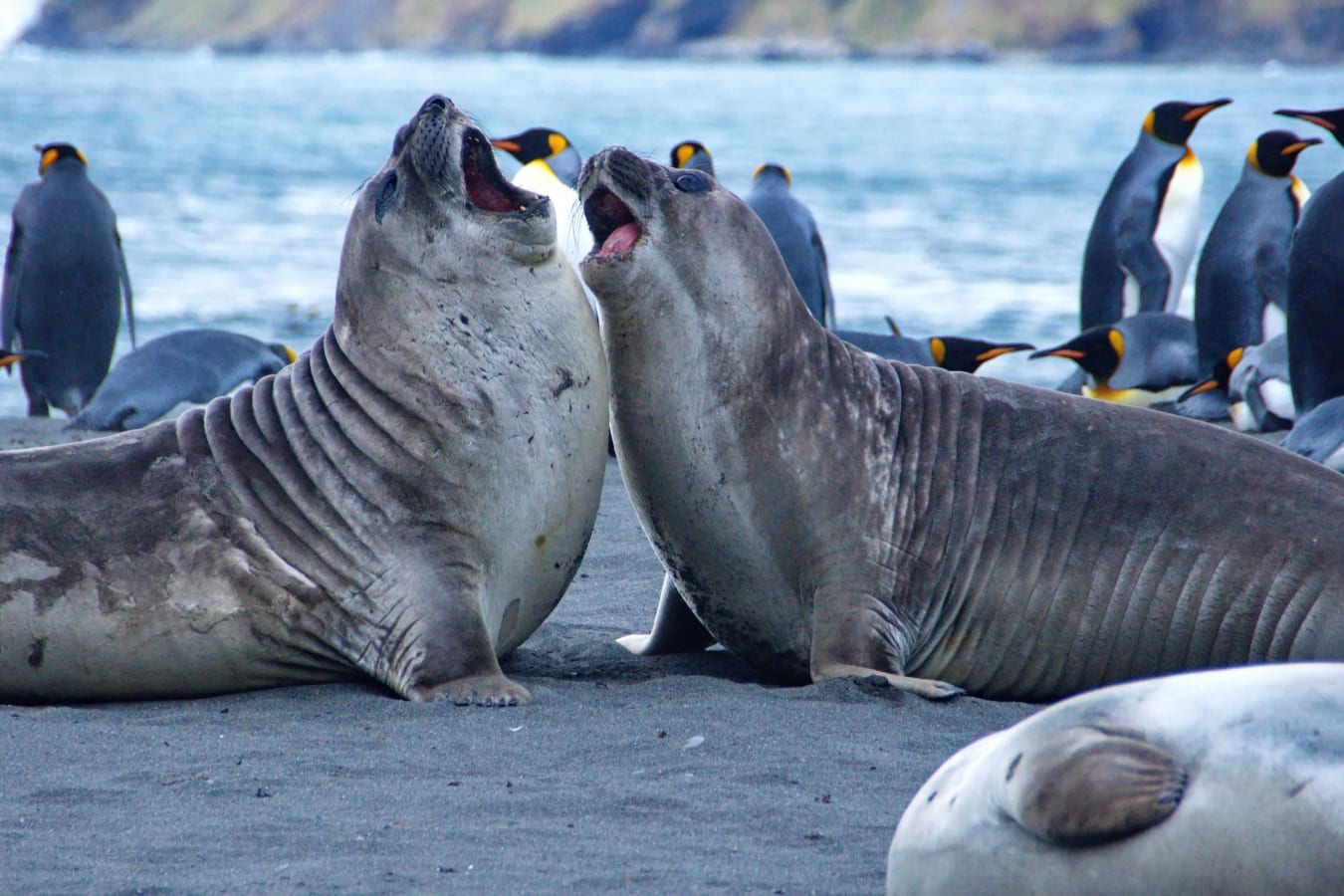
Southern elephant seals, the largest pinnipeds on earth. Males gather in dense breeding colonies along the coast.
11. The Iberá Wetlands: A Hidden Wilderness
While Iguazú and Patagonia get all the glory, the Iberá Wetlands (Esteros del Iberá) are Argentina's best-kept secret. It is one of the largest freshwater wetlands on the planet, located in the northeast province of Corrientes.
Safari Argentinian Style: Kayaking with Caimans
Exploring Iberá is done mostly by boat or kayak. The water is crystal clear, and the density of wildlife is staggering. You will see hundreds of caimans (jacarés), giant marsh deer, guanacos, and capybaras (the world's largest and most chill rodents) lounging on the banks. It's a quiet, immersive wilderness experience.
Rewilding Success Stories in Corrientes
Iberá is also the site of one of the most ambitious rewilding projects in the world. The Rewilding Argentina foundation has successfully reintroduced jaguars, giant anteaters, and macaws to the ecosystem. Staying at one of the local lodges allows you to see the direct impact of these conservation efforts. Curious about Argentina's wild side? Our Wild Argentina tour combines Iguazú Falls, the Iberá Wetlands, and Puerto Madryn's penguins.
12. Córdoba: History and Sierras
Argentina's second city, Córdoba, is a vibrant blend of colonial history and a massive student population that keeps the city feeling young and rebellious.
Jesuit Block and the Student Vibe
In the heart of the city lies the Jesuit Block, a UNESCO site containing the oldest university in Argentina, founded in 1613. The architecture is stunning, but the energy of the city comes from its seven universities. The "Gueemes" neighborhood is the place to be, filled with art galleries, vintage shops, and bars serving the local favorite drink: Fernet and Coke.
Exploring the Sierras Chicas and Mountain Villages
Outside the city, the Sierras de Córdoba offer rolling hills and charming villages, much like the picturesque San Martín de los Andes or Villa La Angostura in the Lake District. Places like La Cumbre or Villa General Belgrano (a German-style alpine village) are perfect for horseback riding, paragliding, or simply escaping the heat of the plains.

A lakeside beach at San Martín de los Andes, with a lifeguard hut on the sand and forested Andean slopes across the water.
Crafting Your Itinerary: How to Connect the Dots
Trying to see all twelve of these places in one trip is a recipe for burnout. Instead, focus on a route that minimizes travel time and maximizes your "feet-on-the-ground" experience.
The Two-Week "Greatest Hits" Route
- Days 1–4: Buenos Aires. Settle in, eat steak, see a Milonga.
- Days 5–7: Iguazú Falls. Fly in, see both sides, fly out.
- Days 8–11: El Calafate & El Chaltén. The glacier and one big hike.
- Days 12–14: Return to Buenos Aires for one final shopping spree and a flight home.
The Three-Week Deep Dive into Patagonia
- Days 1–3: Buenos Aires.
- Days 4–7: Bariloche. Rent a car for the Seven Lakes Drive.
- Days 8–11: El Chaltén. Spend serious time on the trails.
- Days 12–14: El Calafate. Perito Moreno and an estancia stay.
- Days 15–18: Ushuaia. Beagle Channel and the end of the world.
- Days 19–21: Buenos Aires/Relaxation.
Essential Travel Tips for Your First Trip
Argentina is generally a safe and welcoming country, but like any destination, it has its quirks.
Safety and Health: What You Need to Know
In big cities like Buenos Aires and Rosario, petty theft is the main concern. Keep your phone in your pocket, don't wear flashy jewelry, and be aware of your surroundings, especially in tourist-heavy areas like La Boca. Health-wise, the tap water in major cities is safe to drink, and Argentina has a high standard of medical care, but always travel with insurance.
Dressing for Success: From Tropical Jungle to Arctic Winds
The key word is layers. If you're doing a "north to south" trip, you'll need shorts and linen for Iguazú and a Gore-Tex shell, down jacket, and thermal base layers for Patagonia. The wind in the south is no joke; it can knock a grown person over, and it makes 40°F (4°C) feel like 20°F (-6°C).
Food and Drink: Beyond Steak and Wine
While beef is king, don't sleep on the other staples. Empanadas vary by province (try the spicy ones in Salta!). Dulce de leche is the national sweet, found in everything from alfajores (cookie sandwiches) to ice cream. And then there is Mate. You will see everyone carrying a thermos and a gourd. It's more than a tea; it's a social ritual. If someone offers you a mate, accept it; it's a sign of hospitality.
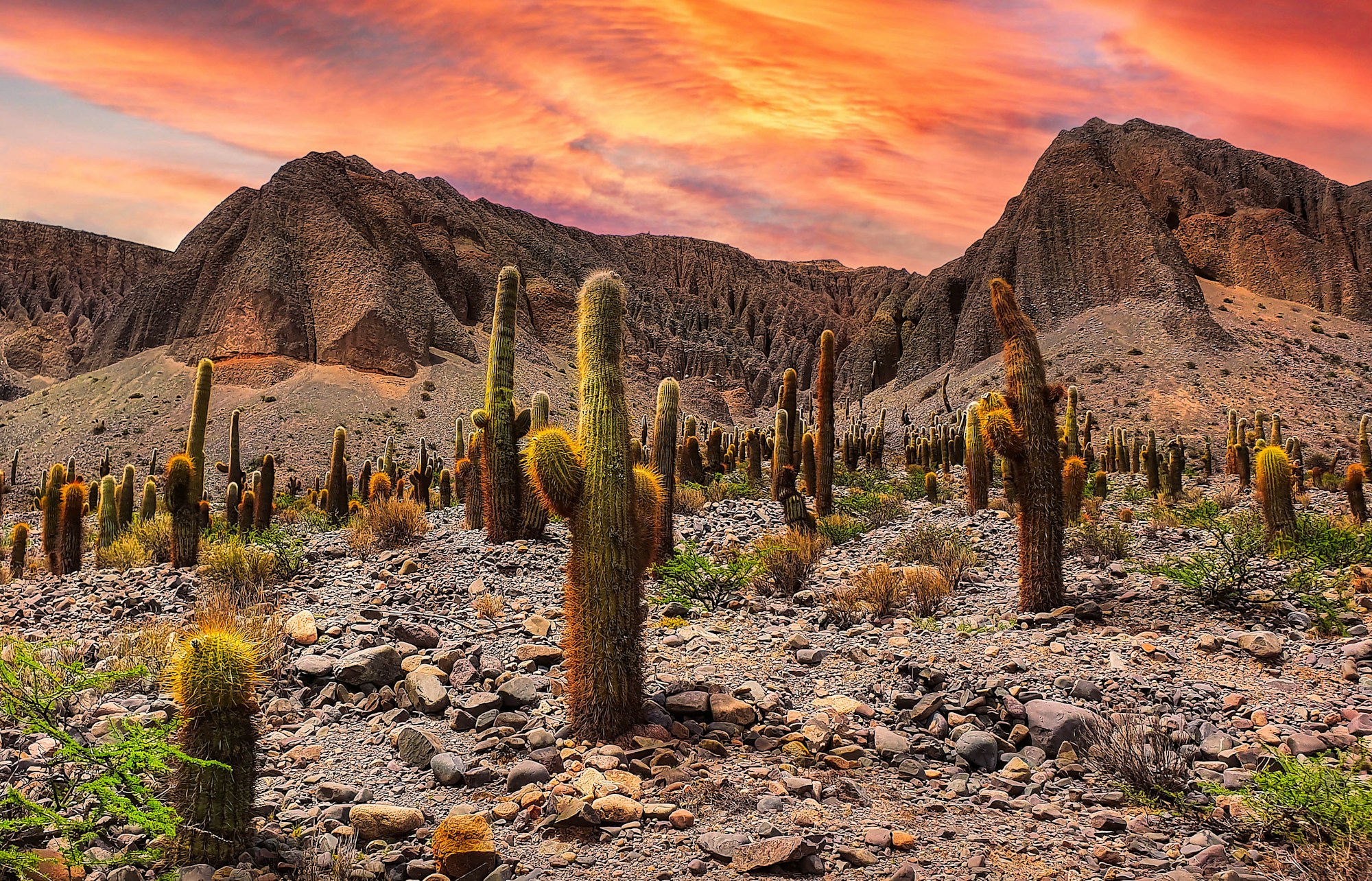
A forest of columnar cacti on a rocky slope in the Salta highlands, with eroded desert mountains behind.
Why Argentina Stays in Your Heart
Argentina is a country that stays with you long after the red dust of Salta has been washed from your shoes or the roar of Iguazú has faded from your ears. It is a place of immense beauty, certainly, but its true magic lies in its resilience and its passion.
The people here have a zest for life that is infectious. They will debate politics with you until 2:00 AM over a bottle of wine, show you the secret way to the best viewpoint, and treat you like family within ten minutes of meeting you. Argentina doesn't just offer sights to see; it offers a way to feel: alive, challenged, and utterly enchanted. Pack your bags, bring an open heart (and a very hungry stomach), and prepare for the journey of a lifetime. Ready to start planning? Our team would love to connect. Contact us today to start building your custom Argentina itinerary.
Plan My Argentina Trip