

Australia’s Best-Kept Secrets:
12 Places Most Travelers Overlook
Most travelers arrive in Australia with a mental checklist that looks remarkably similar: a selfie with the Sydney Opera House, a sunset over Uluru, a flight into Brisbane, and a lazy afternoon on Bondi Beach or a Whitsundays beach. And while there’s nothing wrong with those icons - they’re famous for a reason - they represent only the surface of a continent that spans nearly 7.7 million square kilometers. Even within the country’s most celebrated regions, there are quieter corners that most itineraries skip entirely.
Australia rewards travelers who look past the postcard shot, seeking out surreal pink lakes and hidden valleys. Beyond the obvious lookouts and beach clubs lies a version of Sydney, Queensland, Victoria, the Flinders Ranges and Adelaide in South Australia, and the Red Centre that feels far more personal, the coves, gorges, and reef pockets that locals love and first-timers usually miss.

Sydney’s illuminated Opera House commands the harbor as the surrounding city skyline glows after dark.
Why Look for the Hidden Side of Australia’s Icons
Seeking out the quieter side of a well-known destination, whether in the Outback or on the coast, isn’t about avoiding crowds for its own sake, it’s about the feeling of discovery. Standing in a gorge instead of at the main lookout, or snorkeling a coral cay instead of the busiest reef platform, connects you with the raw character of the landscape. These spots often carry deeper stories, from Aboriginal cultural heritage to the pioneers and naturalists who first mapped them. Seeking them out turns a standard vacation into something closer to a genuine expedition.
Our Selection Criteria for a True Hidden Gem
Not every quiet cove or side road qualifies as a hidden gem. To make this list, a location has to offer something transformative.
The Off the Beaten Path Factor
A true hidden gem requires a small detour, a boat transfer, a scenic drive, or a guide who knows where to turn off the main track. These aren’t places you simply pass through on the way to somewhere bigger.
Cultural and Natural Significance
A gem must have depth, whether that’s a geological feature millions of years in the making or a site of deep spiritual importance to Traditional Owners.
Accessibility and Traveler Effort
We’ve balanced this list between the adventurous and the easily reached, so there’s something here whether you have a free afternoon or a full extra day to explore.

A helicopter tour over Whitehaven Beach offers clear views of the turquoise water and reefs below.
1. Whitehaven Beach, Whitsunday Islands, Queensland
Most travelers know the Whitsundays as a cluster of tropical islands off the Queensland coast, far north of the busy Gold Coast and Sunshine Coast, but few realize just how secluded its centerpiece beach really is. Whitehaven Beach is only reachable by boat, and its silica sand is so pure it stays cool underfoot even at midday.
A Beach Unlike Any Other
The sand here is over 98% pure silica, which means it never holds heat and never yellows with time. Combined with the swirling turquoise shallows at Hill Inlet, it creates one of the most photographed, yet still genuinely uncrowded, coastlines in the country.
Best Experienced by Sea
Whether you arrive on a multi-day catamaran cruise or a half-day sailing trip from Hamilton Island, the approach by water is part of the magic, revealing the 74 islands of the Whitsundays one bay at a time.
See it for yourself: Our Airlie Beach, Whitsundays Catamaran Cruise & Sydney itinerary includes a 3-night catamaran sail through these islands before continuing on to Sydney.
Set Sail Through the Whitsundays2. Hamilton Island’s Quiet Side, Queensland
Hamilton Island is often treated as a quick stopover, but travelers who linger discover a resort island where golf carts outnumber cars and the pace of life slows dramatically.
An Island Built for Unwinding
With white sand coves, walking trails, and a marina lined with cafes, Hamilton Island rewards a slower visit rather than a same-day transit.
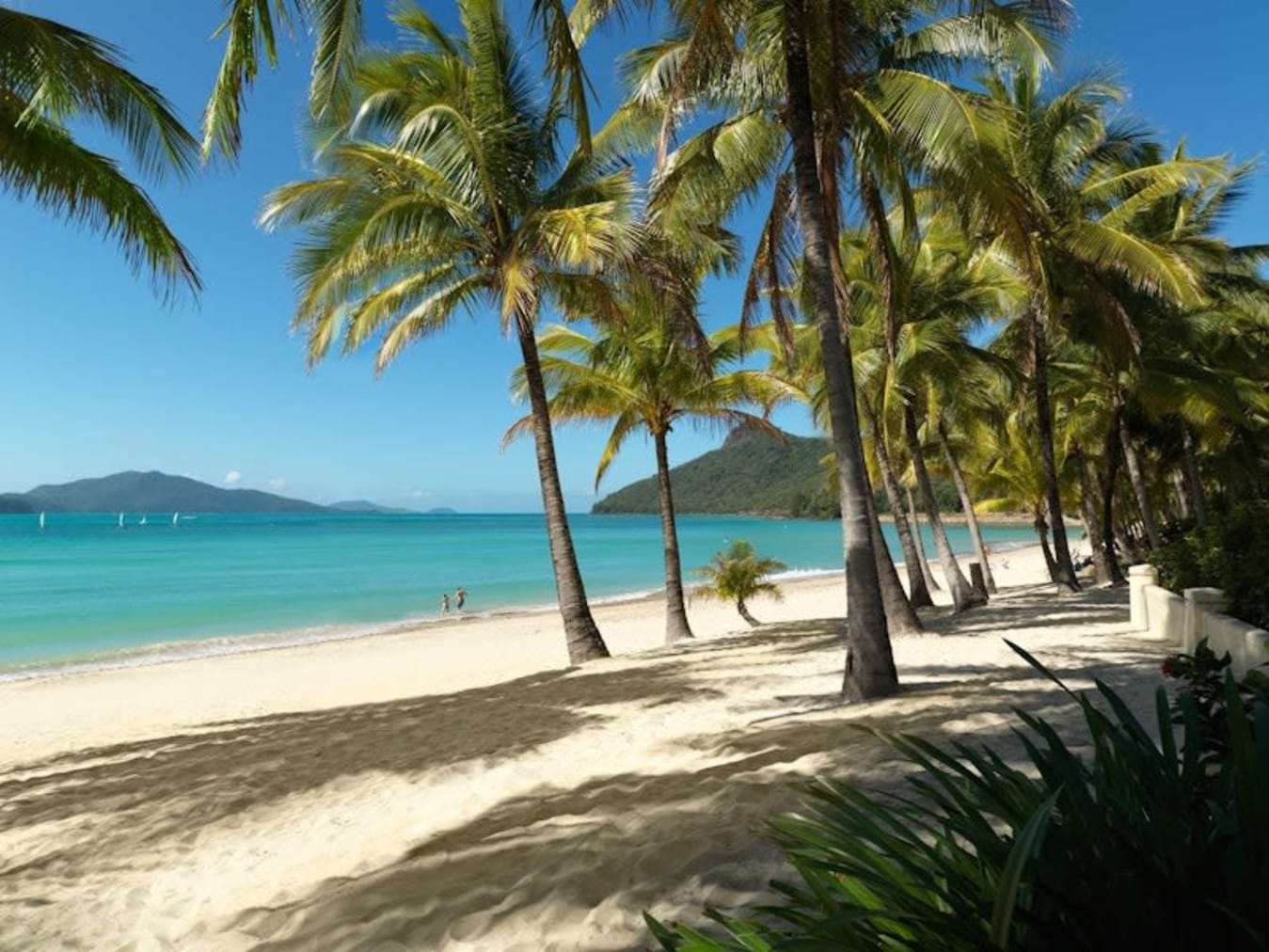
A palm-lined beach on Hamilton Island overlooks the calm waters of the Whitsundays.
A Gateway to Hardy Reef
From Hamilton Island’s marina, a full-day cruise leads out to a pontoon moored at Hardy Reef, where an underwater observatory and semi-submersible let you take in the Great Barrier Reef without ever getting wet.
Ready to explore? Our Hamilton Island Excursion is designed to attach easily to the beginning or end of any Australia itinerary.
Add Hamilton Island to Your Journey3. Eaglehawk Lookout, Blue Mountains, New South Wales
Everyone photographs the Three Sisters from Echo Point, but a short walk off the main trail leads to Eaglehawk Lookout, a far quieter vantage over the same formation.
A Local Secret Hiding in Plain Sight
From this angle, the Three Sisters and the Jamison Valley take on a different light throughout the day, and you’ll often have the view entirely to yourself.
Part of a Bigger Wilderness Day
The lookout is typically paired with a stop at Euroka Clearing to spot wild kangaroos, a visit to Govetts Leap’s 180-meter waterfall, and a walk through the Blue Mountains Botanic Gardens.

The colorful bathing boxes of Brighton Beach are one of Melbourne’s most recognizable coastal sights.
4. Yarra Valley Wine Country, Victoria
Just outside Melbourne, the Yarra Valley and the lush reaches of Gippsland are where the city’s food-and-wine obsession really comes to life, much like the famous Margaret River, yet it’s frequently overlooked by travelers sticking to the CBD (Melbourne’s central business district).
Boutique Over Big-Name
Small producers like Dominique Portet and Coldstream Hills, founded by wine critic James Halliday, offer barrel tastings and cellar-door visits that feel a world away from mass-market wine tourism.
A Full Day, Not a Rushed One
A relaxed day trip typically includes stops at four wineries, each with its own story, capped by a farmhouse-style lunch overlooking the rolling hills.
Explore Melbourne and beyond: This region is a highlight of our Best of Australia Explorer tour, an 18-day journey across the country’s most compelling landscapes.
Discover Australia’s Highlights5. Apollo Bay and the Great Ocean Road, Victoria
The Twelve Apostles get the fame, but the Great Ocean Road’s quieter magic is found in the stretches between the big lookouts.
A Tranquil Seaside Stop
Apollo Bay is a low-key town of cafes and rolling hills, serving as a coastal alternative to the rugged peaks of the Grampians or the busier streets of Lorne, ideal for a coffee or lunch break away from the tour-bus crowds at the major viewpoints.
Koalas in the Wild
Near the road’s iconic EcoLodge, an ancient eucalyptus forest walk offers close encounters with wildlife reminiscent of Kangaroo Island, including koalas, kangaroos, and native birds before the drive continues on to the Twelve Apostles.
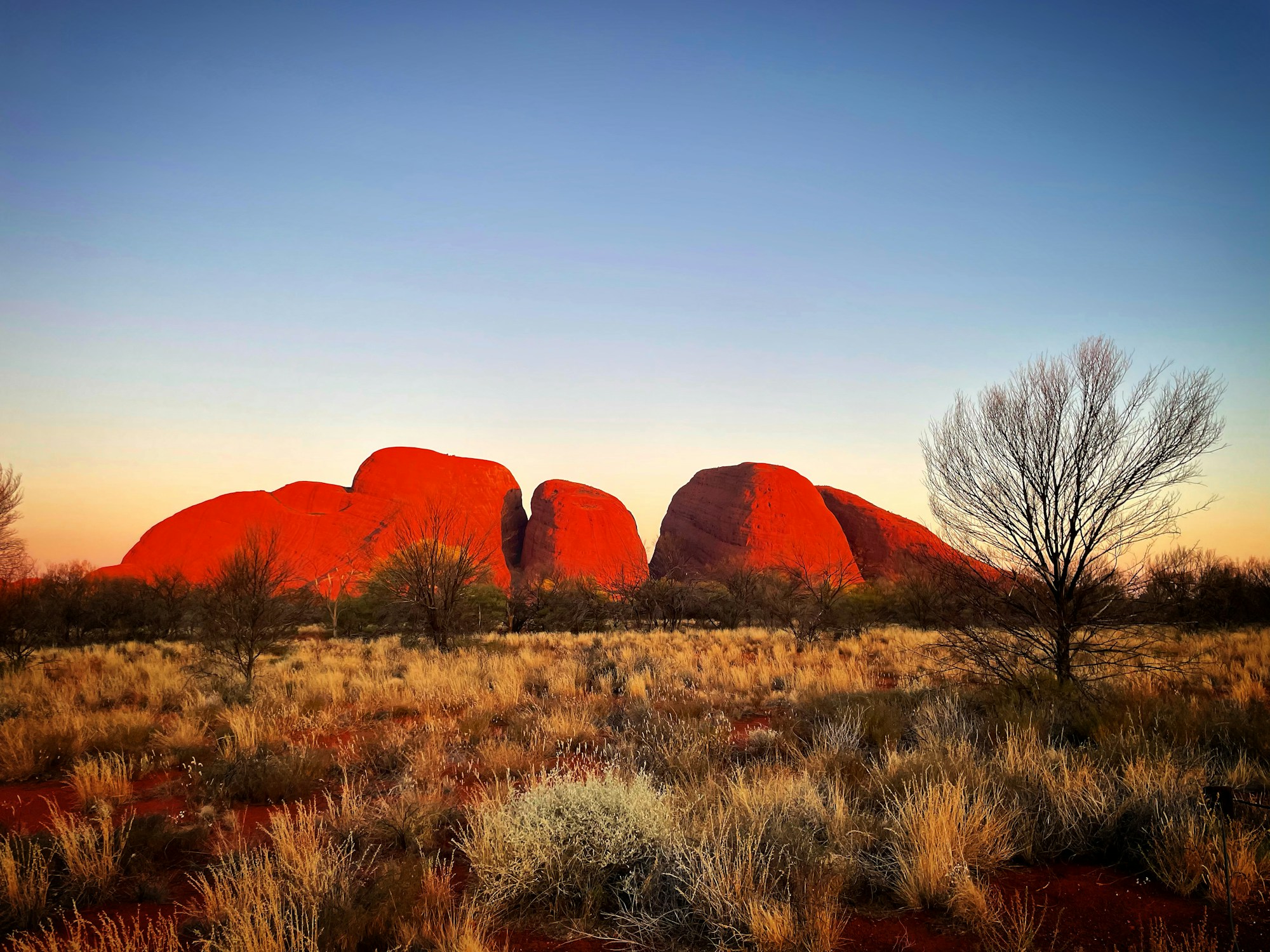
The towering domes of Kata Tjuta rise from Australia’s Red Centre.
6. Kata Tjuta, The Olgas, Northern Territory
Uluru, also known as Ayers Rock, gets the spotlight, but forty minutes away, the 36 red domes of Kata Tjuta hold their own quiet power, and far fewer visitors.
A Sacred, Less-Traveled Landscape
Kata Tjuta is a significant Aboriginal men’s ceremonial site, and walking through Walpa Gorge between its towering conglomerate domes offers a very different sense of scale than Uluru’s single monolith.
Night Skies Over the Red Centre
After sunset, Kata Tjuta’s silhouette against a star-filled sky is a striking sight for anyone staying nearby, a fitting preview of the Red Centre’s famous dark skies.
Ready to plan the ultimate Australia trip? See how Kata Tjuta, Uluru, and the Red Centre fit into our Best of Australia Explorer itinerary.
7. Low Isles, Port Douglas, Queensland
While most reef trips head straight to the outer reef, Low Isles is a small coral cay just an hour’s sail from Port Douglas, and it’s often overlooked entirely.
An Intimate Reef Experience
This unspoiled sand cay is ideal for families and first-time snorkelers, with calm, shallow waters and a resident marine biologist on hand to point out what you’re seeing.
A Relaxed Alternative to the Bigger Boats
Because Low Isles sees far less traffic than the major reef pontoons, it’s a slower, more personal way to experience the Great Barrier Reef coral reef system.

A close-up view of a sea turtle swimming above coral in the Great Barrier Reef.
8. Mossman Gorge and the Daintree Rainforest, Queensland
The Daintree is billed as the world’s oldest surviving tropical rainforest, but its true highlight is a quiet gorge where the Traditional Owners still lead guided walks.
Where Rainforest Meets Culture
At Mossman Gorge, a Kuku Yalanji-guided walk introduces the plants, stories, and survival knowledge tied to this ancient landscape, before a cool swim in the crystal-clear gorge waters.
A River Cruise Into Prehistory
Nearby, a quiet cruise along the Daintree River reveals mangrove ecosystems and wild crocodiles, a strikingly different landscape from the reef just offshore.
Discover the Daintree for yourself: This region is featured in both our Sydney and Tropical Queensland Self Drive tour and our Best of Australia Explorer itinerary.
9. Michaelmas Cay, Cairns, Queensland
Just off Cairns, this low-lying, vegetated sand cay is both a national park and a protected seabird sanctuary, and it offers some of the region’s most accessible reef snorkeling.
Reef Access for Every Skill Level
With roughly 90% of the reef’s biodiversity concentrated in the top four meters of water, Michaelmas Cay is ideal for both first-timers and experienced snorkelers alike.
A Diver’s View Without Diving
A semi-submersible tour lets you take in the coral and marine life just below the surface, guided by an onboard naturalist.
10. The Rocks and Mrs Macquarie’s Point, Sydney
Sydney’s icons, the Opera House and Harbour Bridge, are unmissable, but the neighborhoods around them hold their own quieter appeal.
Convict History Underfoot
A walk through The Rocks uncovers Sydney’s earliest colonial history, tucked between boutique shops and laneway cafes just steps from the Sydney Harbour.

Sydney Harbour glows in warm evening light as the city begins to transition into night.
A Final View Worth the Detour
Mrs Macquarie’s Point, reached via Kings Cross and Double Bay, offers one of the city’s most photogenic, and least crowded, views back over the harbor.
Speak With an Australia Travel Specialist11. Split Point Lighthouse and Loch Ard Gorge, Victoria
Tucked along the Great Ocean Road, these two spots are easy to drive past if you’re only chasing the Twelve Apostles.
A Coastal Landmark with a View
Split Point Lighthouse offers sweeping coastal views and a good coffee stop between the road’s bigger attractions.
Ancient Rock, Real History
Loch Ard Gorge tells the story of an 1878 shipwreck alongside dramatic limestone cliffs, making it one of the more emotionally resonant stops along the drive.
12. Sails in the Desert and the Red Centre Night Sky, Northern Territory
Few travelers realize that some of the best stargazing in Australia happens right at the doorstep of Uluru-Kata Tjuta National Park.
Dining Under an Ancient Sky
An evening dinner experience on a viewing platform overlooking the national park combines Aboriginal storytelling, a didgeridoo performance, and a bush-tucker-inspired menu.
A Sky Unlike Anywhere Else
With exceptional atmospheric clarity, the Red Centre reveals the Southern Cross, the Milky Way, and constellations most travelers have never seen with the naked eye.
Planning Your Deep Dive Into These Destinations
Getting off the main tourist track in Australia takes more than a GPS, it takes the right planning and the right local partners.
The Right Transport for the Terrain
Some of these experiences require a boat transfer to spots like Rottnest Island, a domestic flight from Perth or Darwin, or a self-drive rental car, while others are a short detour from a major city. Our team builds the logistics into your itinerary so you’re not left figuring it out on arrival.

Rottnest Island is known for its clear water, sandy beaches, and quiet coastal scenery.
Respecting Indigenous Lands and History
Many of these hidden corners, from Kata Tjuta to Mossman Gorge, are deeply significant to Traditional Owners. Traveling with a knowledgeable local guide adds a layer of meaning you won’t find in a guidebook.
Let the Experts Handle the Details
Australia is vast, and the best hidden gems are often just a short detour from the places you’re already planning to visit, the trick is knowing which ones are worth it.
Which Hidden Gem Will You Visit First?
Australia is far more than a handful of famous landmarks, it’s a tapestry of quiet coves, ancient gorges like those in Kakadu National Park, and reef pockets from Tasmania to the Top End, tucked just beside the places everyone already wants to see. Whether that means sailing past Whitehaven Beach, wandering Mossman Gorge, or watching the stars over Uluru-Kata Tjuta National Park, these hidden gems offer a deeper way to experience the country’s most iconic regions. Ready to build your own Australia adventure? Browse all of our sample Australia itineraries or request a free custom quote to get started.
Ready to Start Planning Your Dream Trip to Australia?
Whether you already have a few must-see destinations in mind or you’re still exploring what’s possible, Global Basecamps would love to help bring your ideal journey to life. Our team specializes in crafting custom itineraries that go beyond the expected, connecting you with the right destinations, local guides, meaningful experiences, and seamless logistics from start to finish. Request a Quote to Start Planning
Build Your Australia Journey