
Documentaries come and go, and sometimes they are as easily forgettable as they are initially impactful, but we think Born to Be Wild, a film directed by David Lickley, deserves a little more attention. Nature documentaries have always been commercially and critically successful, and over the last few years the popularization of marching penguins, along with BBC-produced hi-def documentary series have certainly raised the bar for commercial success. High definition, 3-D and IMAX formats, along with the narrations of a man named Morgan Freeman are the new formula it seems.
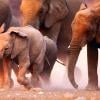
Documentaries are one thing, but when a popular film aims to educate young people about ecological conservation ethics in a new, fun way, we feel like we have to stand up and highlight it. Born to Be Wild is a movie aimed more directly at children than adults, though the big kids here in the office certainly enjoyed it. The short (45 minutes) film follows the stories of two sets of orphans, of the orangutan and elephant variety, as they are rescued on two different ends of the Indian Ocean by two dedicated women hoping to someday release them back into the wild. In what Morgan Freeman calls a “fairy tale” come to life, these orphans call to us in a familiar, Charles Dickens kind of way.
One of our own recently returned from a relaxing vacation in Vietnam. She was kind enough to share some of her pictures and experiences with us! This is How We Travel.
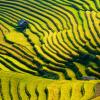
Vietnam was the first stop on a five-week trip for us, and it couldn’t have started better! Having never been on a Vietnam tour before, we wanted to explore some of the country’s highlights and cover the northern, central, and southern region of Vietnam.
First stop was Hanoi. After arriving late in the afternoon we explored the Old Quarter, stopping at a small food stall for some of the best pho we’ve ever had! Don’t miss out on the opportunity to eat street food in Vietnam. Often times the pho we had for about a $1 on the street was much better than what was available at restaurants.
By the looks of the upcoming fall season, it looks like it’s time to dust off your Bhutanese festival clothes, everybody. If there is ever a unique travel opportunity or rare confluence of events that would make a trip extra-special, we like to let people know about it; this is one of those times. Thanks to the nature of the Bhutanese lunar calendar this year, two Tsechu festivals are running back-to-back in Wangdue and Thimphu from September 23-27.
Similar to no other country, and unfamiliar to even the most experienced world-traveler, Bhutan itself is the ultimate destination for travelers who crave rare experiences. Valuing its citizens’ harmony and happiness over economic growth, part of the government’s efforts to maintain its culture intact, and its environment pristine, has been limiting foreign travelers within its borders. Bhutan is an example of sustainable travel gone government-enforced. One can only tour Bhutan through a government-licensed operator, and many religious sites are off-limits to tourists. However when you visit this enigmatic land, you will become one of the few foreigners to witness its slow introduction to the modern world.
So you didn’t get your ticket to Coachella this year. So Stagecoach doesn’t line up with your work schedule. So Outside Lands isn’t really your scene. What if there was an alternative every year that rivaled the most popular international music festivals? What if it featured some of the best musical talent from all over the world? What if it fell in the middle of your eco tour that you conveniently started planning yesterday? Let us introduce you to the Fuji Rock Festival in Niigata Prefecture, Japan. Yes, that Japan.
Since 1997 when the headliners, the Red Hot Chili Peppers, legendarily played through a typhoon despite lead singer Anthony Kiedis suffering through a broken arm, the Fuji Rock Festival has welcomed western artists such as Coldplay, Foo Fighters, Muse, and Neil Young & Crazy Horse to headline every year. Named so because the first disastrous concert was set in the shadow of Mt. Fuji, the concert has since been set at a picturesque ski resort in Niigata during its summer off-season. Many Japanese music lovers take this as an opportunity to escape the island’s summer heat in the high mountains, and international travelers use it as the exclamation point at the end of their Japanese vacation.
A documentary film has been making its way around the office this week. This DVD has changed hands again and again, and we have all spent time witnessing a year in the life of a man named Feliciano and his young family. The film, Mi Chacra, or “My Land,” has been speaking to our company’s ethos in a unique way. Superbly filmed and scored largely with a traditional quena flute, the documentary manages to encompass the epic nature of the Andes mountains along with the very personal story of a family trying to make a life-changing decision. The story covers themes both personal and human, along with the larger issue facing all developing countries: that of rapid urban growth and shrinking rural populations. Beautiful scenery, and the exposure of a disappearing way of life come together to tell a story both foreign and familiar.